
Affiliate Marketing Firms: How They Work and How to Choose the Right Partner
A publisher can spend weeks creating product reviews, comparison guides, videos, or social media content and still struggle to turn attention into revenue. A common reason is that the connection between brands, tracking systems, and audiences is not always simple. This is where affiliate marketing firms help create a structured partnership between advertisers and publishers.
Affiliate marketing firms sit between companies that want customers and partners who can influence buying decisions. They help manage affiliate programs, track conversions, handle commissions, and improve campaign performance. For creators, bloggers, influencers, and online businesses, these firms can provide access to partnership opportunities that would otherwise be difficult to manage alone.
What Are Affiliate Marketing Firms?
Affiliate marketing firms are companies that help businesses run affiliate partnerships with publishers, influencers, creators, and other marketing partners. They may operate affiliate networks, provide software platforms, manage campaigns, or offer partnership management services.
The main goal is simple: connect advertisers with partners who can generate measurable customer actions. Those actions may include product purchases, software subscriptions, app installs, qualified leads, or other conversions.
Unlike traditional advertising, affiliate marketing is usually performance-based. Advertisers generally pay commissions after a tracked result happens rather than paying only for exposure.
The Role of Advertisers and Publishers
Advertisers are brands, retailers, SaaS companies, or service providers looking for new customers. Publishers include websites, bloggers, email marketers, influencers, comparison sites, and creators who promote relevant offers to their audiences.
A successful affiliate relationship depends on alignment. A technology blogger recommending useful software to an audience interested in productivity tools is usually more effective than promoting unrelated products simply because they offer higher commissions.
How Affiliate Marketing Firms Work
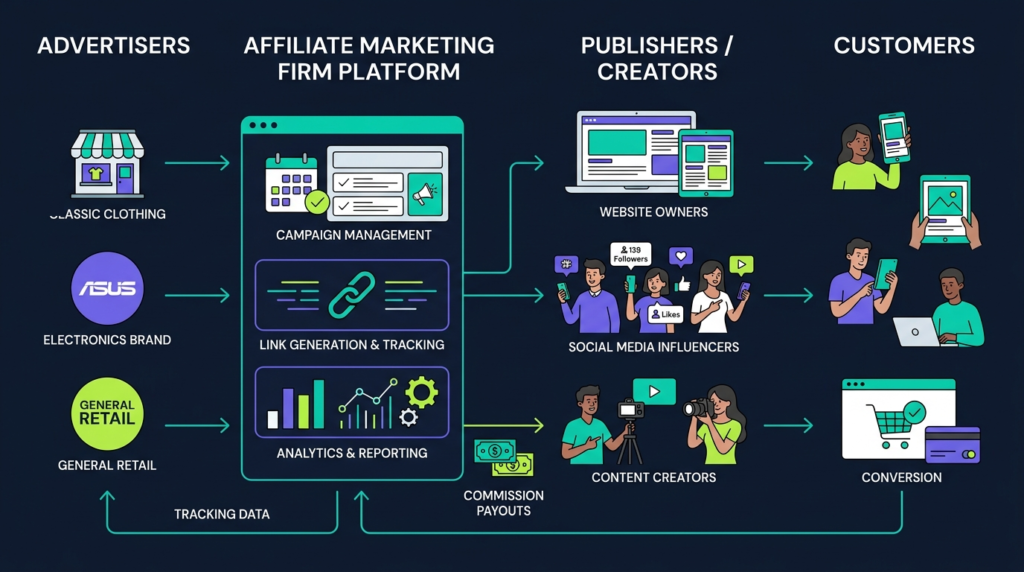
Most affiliate marketing firms manage several important parts of the partnership process. The exact services depend on whether the company operates as an affiliate network, affiliate software provider, or managed partnership agency.
1. Connecting Brands With Marketing Partners
Affiliate firms provide marketplaces or platforms where advertisers can recruit publishers and creators. Publishers can browse available affiliate programs, review commission structures, and apply for partnerships that match their content.
2. Tracking Clicks and Conversions
Tracking is one of the most important parts of affiliate marketing. Affiliate firms use tracking technology to identify which partner generated a visitor, lead, or sale.
Common tracking elements include affiliate links, cookies, tracking pixels, unique referral IDs, and reporting dashboards. Accurate attribution helps advertisers understand which partners are driving real business results.
3. Managing Commission Payments
Affiliate firms often handle commission calculations and payment processes. Commission structures can vary widely, including one-time payments, recurring commissions, percentage-based sales commissions, or lead generation payments.
4. Improving Campaign Performance
Performance marketing is not only about generating traffic. Successful affiliate campaigns focus on conversion rate, customer quality, audience intent, and long-term customer value.
Example Affiliate Campaign
A software company launches an affiliate program for productivity tools. A publisher creates a detailed comparison article, sends targeted email traffic, and earns commissions from users who subscribe through tracked links. The advertiser gains customers, while the publisher monetizes useful content.
Why Businesses Use Affiliate Marketing Firms
Many companies choose affiliate marketing firms because managing partnerships internally requires technology, reporting systems, compliance processes, and ongoing relationship management.
- Access to established publisher and creator networks
- Better conversion tracking and attribution
- Automated commission management
- Partnership discovery and campaign support
- Performance-based customer acquisition
Why Publishers and Creators Use Affiliate Firms
For publishers, affiliate marketing firms can simplify monetization. Instead of negotiating separate agreements with every brand, creators can access multiple affiliate programs through a single platform.
- Discover products relevant to their audience
- Compare commission opportunities
- Monitor clicks and conversions
- Manage multiple partnerships efficiently
- Create additional revenue streams from existing content
Types of Affiliate Marketing Firms
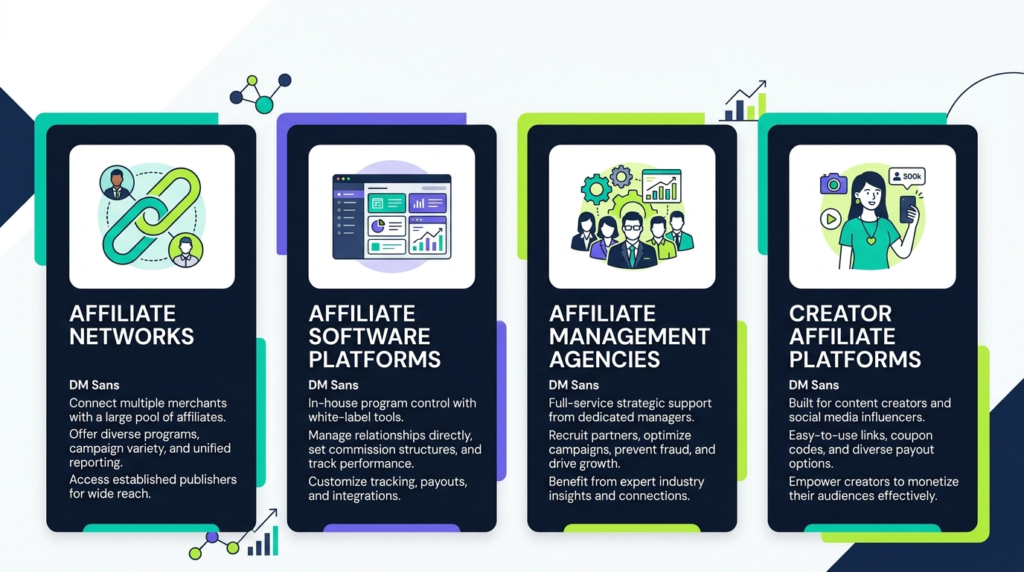
Not every affiliate marketing firm works in the same way. Some focus on large affiliate networks with thousands of advertisers and publishers, while others specialize in creator partnerships, SaaS affiliate programs, influencer campaigns, or managed affiliate growth.
Understanding the different types helps businesses choose the right partner and helps publishers find platforms that match their audience, content style, and monetization goals.
Affiliate Networks
Affiliate networks act as marketplaces connecting advertisers with publishers. They provide tracking technology, reporting dashboards, payment management, and access to many affiliate programs from different industries.
Popular examples include networks that support retail, technology, finance, travel, software, and subscription-based businesses. These platforms are often a starting point for beginners because they allow publishers to discover multiple programs in one place.
Affiliate Software Platforms
Some companies provide affiliate software rather than operating a public marketplace. These tools allow brands to create and manage their own affiliate programs, recruit partners, track referrals, and control commission rules.
This approach is common among SaaS companies, ecommerce brands, and businesses that want direct relationships with their affiliates.
Affiliate Management Agencies
Affiliate management firms help advertisers build and optimize affiliate programs. Their services may include recruiting publishers, creating campaign strategies, monitoring compliance, and improving partner performance.
These firms are especially useful for companies that have a strong product but limited internal experience with partnership marketing.
Creator Affiliate Platforms
Creator-focused affiliate platforms help influencers and content creators monetize recommendations. They often combine affiliate tracking with tools designed for social media, video creators, and online communities.
Platforms connecting verified creators, publishers, and advertisers can be useful when transparency, attribution, and reliable payouts are important parts of a partnership strategy. Services such as LinkDividend are examples of platforms focused on connecting these groups through structured partnerships.
List of Affiliate Marketing Firms
The affiliate marketing industry includes global networks, partnership platforms, software providers, and specialized agencies. The right choice depends on the advertiser’s goals, industry, audience, and required level of support.
Amazon Associates
A widely recognized affiliate program that allows publishers to earn commissions by recommending products available through Amazon. It is commonly used by product review websites, niche bloggers, and content creators.
Impact
A partnership management platform used by brands and creators to manage affiliate relationships, influencer partnerships, and performance marketing campaigns.
CJ Affiliate
One of the established affiliate networks connecting advertisers with publishers across industries such as retail, travel, finance, and technology.
Awin
A global affiliate network supporting advertisers and publishers across multiple regions, including Europe, North America, and other international markets.
PartnerStack
A partnership platform focused strongly on SaaS companies, helping software businesses build referral and partner programs.
Best Affiliate Marketing Firms
The best affiliate marketing firms are not always the ones offering the highest commission rates. A strong affiliate partnership depends on tracking reliability, advertiser quality, payment history, support, reporting tools, and whether the available products genuinely fit the audience.
Most affiliate marketing firms manage several important parts of the partnership process. The exact services depend on whether the company operates as an affiliate network, affiliate software provider, or managed partnership agency.
1. Connecting Brands With Marketing Partners
Affiliate firms provide marketplaces or platforms where advertisers can recruit publishers and creators. Publishers can browse available affiliate programs, review commission structures, and apply for partnerships that match their content.
2. Tracking Clicks and Conversions
Tracking is one of the most important parts of affiliate marketing. Affiliate firms use tracking technology to identify which partner generated a visitor, lead, or sale.
Common tracking elements include affiliate links, cookies, tracking pixels, unique referral IDs, and reporting dashboards. Accurate attribution helps advertisers understand which partners are driving real business results.
3. Managing Commission Payments
Affiliate firms often handle commission calculations and payment processes. Commission structures can vary widely, including one-time payments, recurring commissions, percentage-based sales commissions, or lead generation payments.
4. Improving Campaign Performance
Performance marketing is not only about generating traffic. Successful affiliate campaigns focus on conversion rate, customer quality, audience intent, and long-term customer value.
Example Affiliate Campaign
A software company launches an affiliate program for productivity tools. A publisher creates a detailed comparison article, sends targeted email traffic, and earns commissions from users who subscribe through tracked links. The advertiser gains customers, while the publisher monetizes useful content.
Why Businesses Use Affiliate Marketing Firms
Many companies choose affiliate marketing firms because managing partnerships internally requires technology, reporting systems, compliance processes, and ongoing relationship management.
- Access to established publisher and creator networks
- Better conversion tracking and attribution
- Automated commission management
- Partnership discovery and campaign support
- Performance-based customer acquisition
Why Publishers and Creators Use Affiliate Firms
For publishers, affiliate marketing firms can simplify monetization. Instead of negotiating separate agreements with every brand, creators can access multiple affiliate programs through a single platform.
- Discover products relevant to their audience
- Compare commission opportunities
- Monitor clicks and conversions
- Manage multiple partnerships efficiently
- Create additional revenue streams from existing content
| Affiliate Firm Type | Best For | Main Advantage |
|---|---|---|
| Large Affiliate Networks | Publishers wanting many program options | Access to multiple advertisers |
| SaaS Partnership Platforms | Software companies and B2B creators | Recurring commission opportunities |
| Creator Affiliate Platforms | Influencers and social creators | Simple content monetization workflows |
| Affiliate Management Agencies | Businesses needing strategy support | Campaign optimization expertise |
What Makes an Affiliate Firm Stand Out?
- Reliable tracking and accurate attribution
- Clear commission structures
- Quality advertisers and products
- Responsive partner support
- Useful reporting tools
- Strong compliance and payment processes
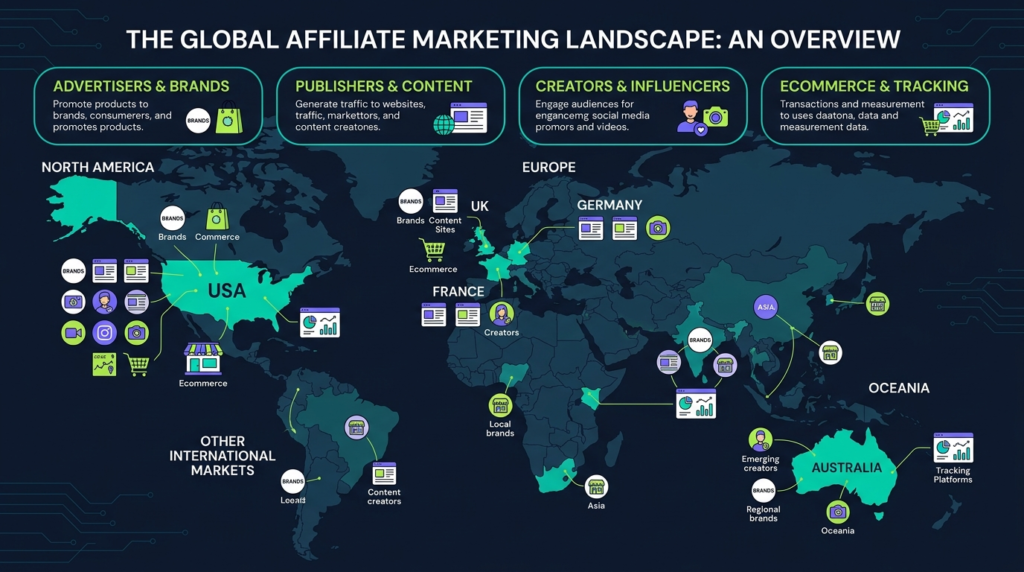
Affiliate Marketing Firms by Country
Affiliate marketing is a global industry, but the best affiliate marketing firms and partnership platforms can vary depending on location, regulations, consumer behavior, and business goals. Publishers and advertisers should consider regional audiences, payment options, language support, and local compliance requirements when selecting a partner.
Affiliate Marketing Firms in the USA
The United States has one of the largest affiliate marketing markets, with strong demand from ecommerce companies, SaaS businesses, financial services, and creator-driven brands.
Popular choices for US-based advertisers and publishers include large affiliate networks, partnership platforms, and creator monetization solutions. Businesses often focus on reliable attribution, fraud prevention, and scalable partner management.
US publishers commonly use affiliate programs for technology products, online courses, software subscriptions, consumer products, and professional services.
Affiliate Marketing Firms in the UK
The UK has a mature affiliate marketing ecosystem with strong adoption among ecommerce brands, retailers, publishers, and content creators.
Affiliate firms operating in the UK often support international campaigns because many brands target audiences across Europe and other English-speaking markets.
Publishers should pay attention to disclosure requirements, consumer protection rules, and transparent advertising practices when promoting affiliate offers.
Affiliate Marketing Firms in Australia
Australia has a growing affiliate and creator economy, particularly in ecommerce, travel, technology, education, and lifestyle categories.
Australian publishers often benefit from choosing affiliate programs that match local buying habits and provide suitable products for their audience.
Affiliate Marketing Firms in Germany
Germany has a strong ecommerce market and an active affiliate industry. Brands and publishers usually place significant importance on transparency, data protection, and consumer trust.
Affiliate marketing itself is generally allowed in Germany, but businesses must follow applicable advertising, privacy, consumer protection, and tax requirements.
Affiliate Marketing Firms in France
France has a developed digital advertising market where affiliate marketing is used by ecommerce businesses, publishers, and influencers.
Companies operating affiliate campaigns in France should consider local advertising rules, consumer rights obligations, and data protection requirements.
Highest Paying Affiliate Programs
Many beginners search for the highest paying affiliate programs, but commission size alone does not determine success. A program paying a large commission may still perform poorly if the product has weak demand, poor conversion rates, or limited audience relevance.
High-paying affiliate opportunities are often found in industries with strong customer lifetime value, such as software, hosting, finance, education, professional services, and subscription products.
| Industry | Common Commission Model | Why It Can Be Attractive |
|---|---|---|
| SaaS Software | Recurring or one-time commissions | Subscription products may create ongoing revenue opportunities |
| Web Hosting | Fixed referral payments | Strong demand among website owners |
| Online Education | Percentage-based commissions | High-value courses can support larger commissions |
| Financial Services | Lead-based commissions | Customer acquisition value can be significant |
Best Affiliate Programs for Beginners
Start With Relevance, Not Just Commission Rates
Beginners often make the mistake of promoting products because they see attractive commission numbers. A better approach is choosing products they understand and that genuinely solve problems for their audience.
Good beginner affiliate programs usually have simple approval processes, clear tracking, reliable payments, and products that are easy to explain.
- Products you already understand
- Services your audience actively searches for
- Programs with clear affiliate terms
- Companies with useful marketing materials
- Offers with realistic conversion potential
Which Affiliate Is Best for Beginners?
There is no single affiliate program that works best for everyone. A beginner creating technology content may have better results with software affiliate programs, while a lifestyle creator may perform better with ecommerce or consumer brands.
The strongest starting point is usually a combination of relevant content, audience trust, search intent research, and consistent testing.
How Affiliate Marketing Income Actually Works
Affiliate marketing income depends on several factors: traffic volume, audience quality, conversion rate, commission amount, and customer value.
For example, earning $10,000 in affiliate revenue does not happen simply because a program offers a high commission. A publisher needs enough qualified visitors, a product that converts, and content that matches buyer intent.
Revenue also differs from profit because publishers may have expenses such as website hosting, content creation, email marketing tools, paid advertising, or outsourcing costs.
How to Choose an Affiliate Marketing Firm
Choosing an affiliate marketing firm is not only about finding the platform with the largest number of programs. The right choice depends on your business model, audience, industry, tracking needs, and long-term partnership goals.
Advertisers should evaluate whether a firm can attract quality partners and provide accurate reporting. Publishers should focus on product relevance, payment reliability, support quality, and whether the available offers genuinely help their audience.
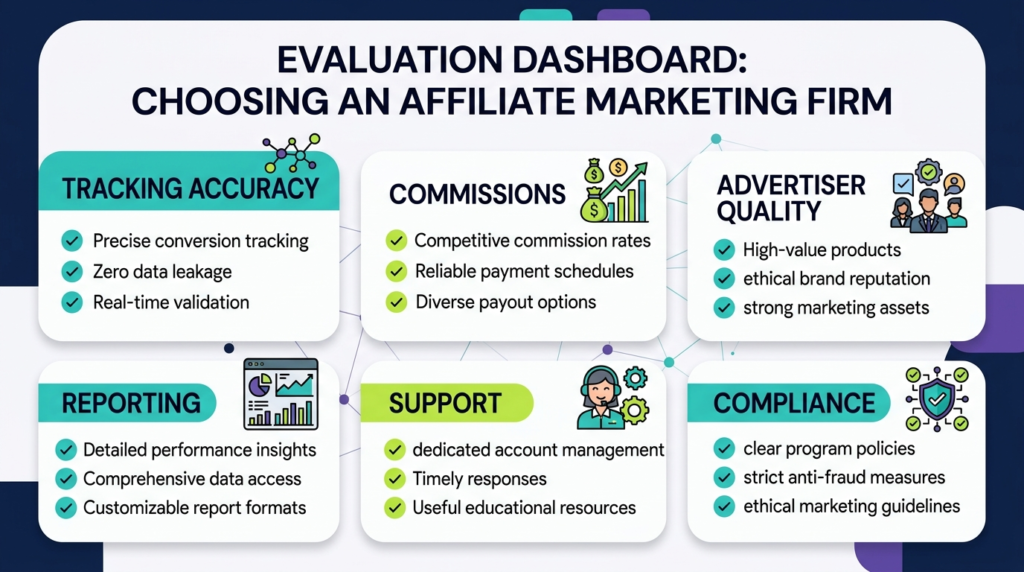
1. Check Tracking and Attribution Technology
Reliable tracking is the foundation of affiliate marketing. A good affiliate platform should provide clear reporting about clicks, conversions, commissions, and partner performance.
Poor attribution can create problems where publishers do not receive credit for conversions or advertisers cannot accurately measure customer acquisition costs.
2. Review Affiliate Program Quality
A large marketplace does not automatically mean better opportunities. Look at the quality of advertisers, product reputation, customer reviews, commission terms, and available marketing resources.
3. Consider Support and Partnership Management
Strong affiliate relationships require communication. Brands may need campaign guidance, while publishers often need help understanding tracking reports, promotional rules, and program requirements.
4. Evaluate Payment Terms
Before joining an affiliate platform, review payment schedules, minimum payout thresholds, supported payment methods, and any conditions that affect commission eligibility.
Practical Selection Checklist
- Does the platform support your niche or industry?
- Are tracking systems transparent?
- Are commission rules easy to understand?
- Does it provide useful reporting?
- Does it have a reputation for reliable payments?
- Are advertiser partnerships relevant to your audience?
How to Start Affiliate Marketing
Starting affiliate marketing does not require creating your own product, but it does require a clear strategy. Many beginners fail because they focus on adding affiliate links before building useful content and understanding audience intent.

- Choose a niche:
Select a topic where you can consistently create helpful content. Technology, finance, education, health products, travel, and software are common affiliate categories. - Build an audience platform:
Create a website, newsletter, YouTube channel, social media presence, or another channel where people can discover your content. - Research affiliate programs:
Compare programs based on relevance, commission structure, product quality, and reputation rather than commission percentage alone. - Create valuable content:
Publish reviews, comparisons, tutorials, buying guides, case studies, and educational resources that answer real questions. - Measure performance:
Use analytics to understand traffic sources, clicks, conversions, and customer behavior. Improve content based on actual performance data.
Affiliate Marketing Examples and Use Cases
Affiliate marketing works across many industries because businesses can reward partners for measurable results. The following examples show how different organizations use affiliate partnerships.
Technology Bloggers
A technology website may publish software comparisons, product reviews, and tutorials. Readers who click affiliate links and subscribe to recommended tools can generate commissions for the publisher.
SaaS Companies
Software businesses often use affiliate programs to encourage consultants, creators, and industry experts to recommend their solutions. Recurring commissions are common because software subscriptions can generate ongoing customer value.
Influencers and Creators
Creators can monetize trusted recommendations by partnering with brands that match their audience. Successful creator affiliate campaigns usually depend on authenticity rather than simply posting promotional links.
Email Publishers
Newsletter creators can include relevant affiliate recommendations alongside educational content. The strongest campaigns focus on usefulness and audience trust.
Common Affiliate Marketing Mistakes
Mistakes That Limit Affiliate Growth
- Choosing products only because they offer high commissions
- Adding too many affiliate links without useful context
- Ignoring search intent and audience needs
- Failing to test conversion performance
- Not understanding affiliate terms and compliance requirements
- Depending on a single traffic source
Why Some Affiliate Websites Fail
Many unsuccessful affiliate websites focus on selling instead of helping. Search engines and audiences increasingly reward content that demonstrates genuine usefulness, clear expertise, and accurate information.
A strong affiliate strategy usually combines SEO, content marketing, audience research, conversion optimization, and relationship building with trusted partners.
Legal and Business Considerations for Affiliate Marketing
Affiliate marketing is a legitimate business model used by companies, publishers, and creators around the world. However, running affiliate campaigns requires attention to advertising rules, consumer protection requirements, privacy obligations, tax responsibilities, and platform policies.
Affiliate Marketing Legality
Affiliate marketing itself is generally legal in many countries, including the United States, United Kingdom, Germany, France, and Australia. The important factors are how promotions are presented, how customer data is handled, and whether businesses follow applicable advertising and consumer protection requirements.
United States
In the United States, affiliate marketers should pay attention to advertising disclosure requirements. Publishers and creators generally need to clearly disclose when they may receive compensation from recommendations or affiliate links.
Businesses should also consider privacy rules, consumer protection requirements, and industry-specific regulations depending on the products or services being promoted.
United Kingdom
Affiliate marketers operating in the UK should consider advertising transparency, consumer protection rules, and applicable data protection requirements. Promotional content should make commercial relationships clear to audiences.
Germany
Affiliate marketing is permitted in Germany, but companies and publishers should consider requirements related to advertising disclosures, consumer rights, privacy regulations, and tax obligations.
France
Affiliate campaigns in France should follow applicable advertising and consumer protection rules. Influencers and publishers promoting commercial offers should clearly communicate paid relationships where required.
Australia
Affiliate marketing is also used by Australian businesses and creators. Marketers should consider advertising standards, consumer protection obligations, privacy requirements, and taxation responsibilities.
Because laws and regulations can change, businesses and publishers should review guidance from relevant government agencies or seek professional advice when needed.
Practical Affiliate Marketing Best Practices
Successful affiliate marketing is built around trust, useful content, and measurable improvement. The strongest publishers usually treat affiliate partnerships as a long-term business relationship rather than a quick monetization method.
- Create content around audience problems:
The best affiliate content answers real questions through reviews, tutorials, comparisons, and practical examples. - Match products with audience intent:
A recommendation should naturally fit the reader’s needs rather than interrupt the user experience. - Track performance carefully:
Monitor clicks, conversions, conversion rate, revenue, and customer quality to understand what works. - Build multiple traffic sources:
Combining SEO, email marketing, social media, and other channels can reduce dependency on one platform. - Maintain transparency:
Clear disclosures and honest reviews help protect audience trust. - Focus on customer value:
Long-term affiliate success depends on recommending useful products that create positive customer experiences.
People Also Ask About Affiliate Marketing Firms
What company pays the highest to affiliate marketing?
There is no single company that always pays the highest affiliate commission. Some SaaS, finance, education, and subscription-based programs offer higher commissions because their customers may have greater lifetime value. However, commission size should always be evaluated alongside product quality, conversion rates, and audience relevance.
Which company is best for affiliate marketing?
The best affiliate company depends on your niche, audience, and goals. Large affiliate networks can provide many options, while specialized platforms may offer better tools for certain industries such as software, ecommerce, or creator partnerships.
Is affiliate marketing real or fake?
Affiliate marketing is a real business model used by major brands, publishers, and creators. However, unrealistic income promises and misleading training programs have created confusion. Legitimate affiliate marketing requires useful content, audience trust, testing, and consistent effort.
Which affiliate is best for beginners?
Beginners often do best with affiliate programs related to topics they understand. A relevant product with strong audience demand is usually more valuable than simply choosing the highest commission offer.
Final Thoughts
Affiliate marketing firms provide the infrastructure that helps advertisers, publishers, and creators build measurable partnerships. They handle important areas such as tracking, attribution, campaign management, and commission processing.
The best affiliate marketing firm is not necessarily the largest or the one with the highest commission rates. A strong partnership comes from reliable technology, quality products, transparent reporting, and alignment between the advertiser and audience.
For beginners, the most sustainable approach is to build valuable content, understand audience needs, choose relevant affiliate programs, and improve campaigns using real performance data.
Continue Learning
If you’re serious about building a sustainable affiliate business, these guides can help you continue learning:

Michael Carter
Senior Affiliate Partnerships Manager
Michael Carter is a performance marketing specialist with over 10 years of experience in affiliate partnerships, publisher growth, campaign optimisation, and digital performance strategy. At LinkDividend, he works closely with publishers, influencers, agencies, and affiliate partners to help maximise campaign performance through data-driven insights, transparent tracking, and long-term partnership development.
Articles written by Michael Carter are reviewed for accuracy, practical value, and current affiliate marketing best practices before publication on LinkDividend.