
How Affiliate Marketing Works (2026 Beginner’s Guide)
When I first heard about affiliate marketing, I honestly thought it sounded too good to be true. People kept saying they were earning money while they slept simply by sharing links online. Like many beginners, I assumed it was another internet trend that sounded easier than it really was.
Curiosity eventually won. I signed up for an affiliate program, copied my first affiliate link, published it on my website, and waited for commissions to arrive. Days passed, then weeks, and nothing happened.
Looking back, I realized I had made the same mistakes that thousands of beginners make every day. I wasn’t creating useful content, I didn’t understand SEO, I had no traffic, and I expected instant results without providing real value to readers.
Everything changed once I stopped chasing shortcuts and started learning how affiliate marketing actually works. Instead of focusing only on earning commissions, I focused on solving people’s problems and helping them make better buying decisions.
Over time, I worked with different affiliate programs and networks, tested various promotional strategies, built niche websites, created coupon pages, published buying guides, and learned what genuinely produces long-term results.
One lesson became very clear: affiliate marketing is not about posting random affiliate links everywhere. It’s about building trust, creating helpful content, and recommending products or services that genuinely benefit your audience.
Whether you’re starting with a blog, YouTube channel, coupon website, Pinterest account, social media page, or even just your smartphone, this guide will explain exactly how affiliate marketing works and how beginners can build a sustainable online income.
What Is Affiliate Marketing?
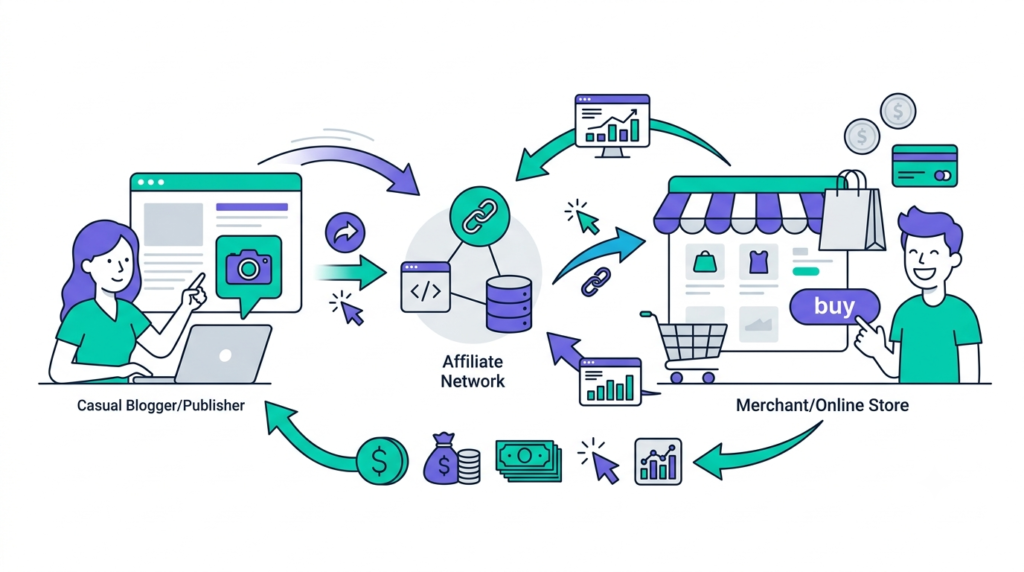
Affiliate marketing is a performance-based marketing model where you earn a commission by promoting another company’s products or services. Whenever someone clicks your unique affiliate link and completes a qualifying action—such as making a purchase, signing up for a service, or downloading an app—you receive a commission.
Unlike starting a traditional business, you don’t need to manufacture products, maintain inventory, process payments, or provide customer support. Your responsibility is to connect potential customers with products or services that match their needs.
Every affiliate sale involves a unique tracking link. When someone clicks that link, a tracking cookie is stored in their browser. If the visitor completes the required action within the cookie period, the affiliate system records the conversion and credits the commission to your account.
This creates a win-win situation for everyone involved.
- The customer discovers a useful product or service.
- The business gains a new customer.
- The affiliate earns a commission for making the referral.
Because companies only pay for successful results, affiliate marketing has become one of the most popular performance marketing models used by businesses worldwide. For affiliates, it offers an opportunity to build an online income without creating their own products.
How Affiliate Marketing Works
Once you understand the basic idea behind affiliate marketing, the next question is obvious: how does the entire process actually work?
At first, I thought affiliate marketing was as simple as copying a link and sharing it online. I quickly learned that there is much more happening behind the scenes. Every click, every visitor, and every purchase is tracked through a system that ensures the right affiliate gets credited for the sale.
The overall process is surprisingly straightforward. Whether you’re promoting a physical product, an online course, software, or a travel booking website, the workflow remains almost the same.
Step 1: Join an Affiliate Program
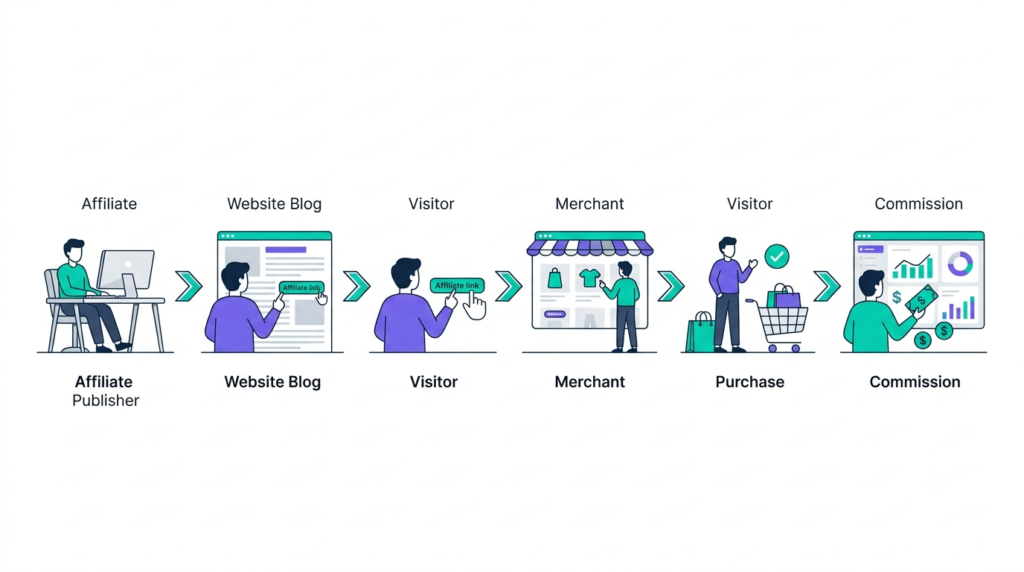
Your journey begins by joining an affiliate program or an affiliate network. Some companies run their own in-house affiliate programs, while others manage them through affiliate networks that connect thousands of publishers with advertisers.
After your application is approved, you’ll receive access to a dashboard where you can browse offers, generate affiliate links, and monitor your performance.
Step 2: Choose Products That Match Your Audience
One mistake many beginners make is promoting every product they can find. I made the same mistake early on, and it rarely produced good results.
Instead, focus on products that are relevant to your audience. If your website is about technology, recommend software, gadgets, or online tools. If you run a fitness blog, promote products related to health and wellness.
The closer the product matches your audience’s interests, the higher your chances of generating conversions.
Step 3: Create Helpful Content
This is where successful affiliates separate themselves from everyone else.
People rarely search Google because they want to click an affiliate link. They search because they have a question or need help making a decision.
Create content that genuinely helps your visitors.
- Detailed product reviews
- Comparison articles
- Buying guides
- Tutorials
- Coupon pages
- Best product roundups
- YouTube videos
- Social media recommendations
Helpful content builds trust, and trust leads to clicks and conversions.
Step 4: Add Your Affiliate Links Naturally
Once your content is ready, place your affiliate links where they make sense. They should feel like a natural recommendation rather than an advertisement.
For example, if you’re reviewing a web hosting company, include your affiliate link near the section where readers are most likely to want to try the service.
Avoid filling every paragraph with affiliate links. Too many links can reduce trust and create a poor reading experience.
Step 5: Visitors Click Your Affiliate Link
When someone clicks your affiliate link, a small tracking cookie is usually stored in their browser. This cookie helps identify that the visitor came from your recommendation.
Each affiliate program sets its own cookie duration. Some cookies remain active for 24 hours, while others may last for 30, 60, or even 90 days.
If the visitor completes the required action before the cookie expires, the commission is credited to your account.
Step 6: The Merchant Confirms the Conversion
After the customer completes a purchase or another qualifying action, the merchant verifies that the transaction meets the program’s requirements.
Depending on the affiliate program, commissions may be approved immediately or after a validation period to account for cancellations, refunds, or invalid transactions.
Step 7: Receive Your Commission
Once the conversion is approved, your earnings appear in your affiliate dashboard. Payments are then processed according to the program’s payout schedule, provided you’ve reached the minimum payout threshold.
Most affiliate programs offer payment methods such as:
- Bank Transfer
- Payoneer
- PayPal (where supported)
- Wire Transfer
Affiliate Marketing Workflow at a Glance
- Join an affiliate program or network.
- Choose products that fit your audience.
- Create valuable, helpful content.
- Add your affiliate links naturally.
- Drive visitors to your content.
- Visitors click your affiliate links.
- The merchant tracks the conversion.
- You earn a commission after approval.
At first glance, affiliate marketing looks like a simple eight-step process. In reality, the biggest challenge isn’t generating affiliate links—it’s consistently creating content that people trust enough to act on. Once you understand that, everything else starts to fall into place.
How Beginners Can Start Affiliate Marketing
If you’re completely new to affiliate marketing, don’t worry. Every successful affiliate started exactly where you are today. The good news is that you don’t need a large budget, technical skills, or years of experience to begin. What you do need is patience, consistency, and a willingness to learn.
When I started, I believed earning commissions would happen quickly. I signed up for affiliate programs, copied a few links, and expected sales to appear. Instead, nothing happened. Looking back, I realized I skipped the most important part—creating content that actually helped people.
Once I focused on solving problems instead of simply promoting products, everything began to change. Traffic increased, visitors stayed longer, and commissions slowly started coming in.
If you’re just getting started, follow these steps.
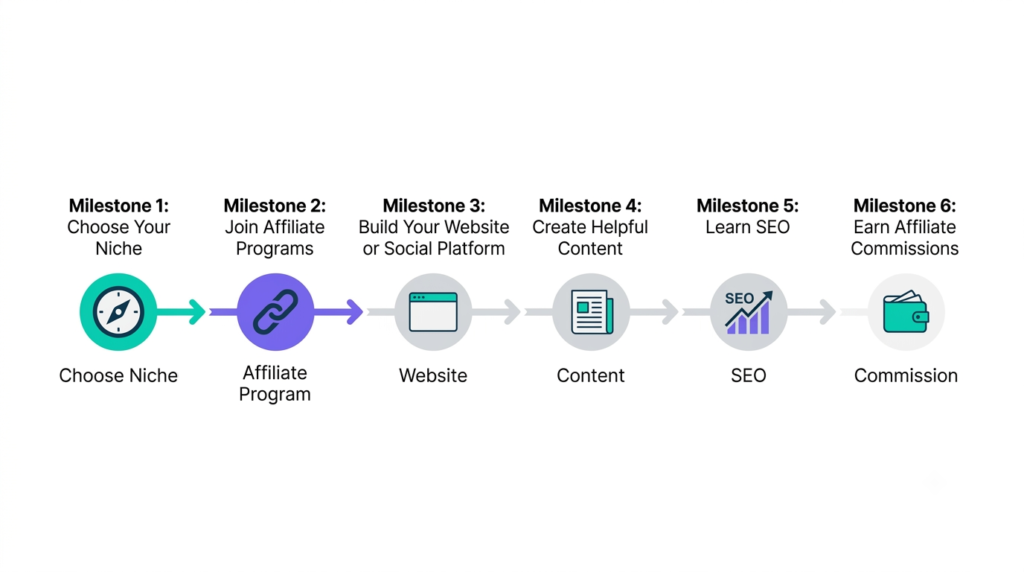
Step 1: Choose a Niche You Can Stay With
A niche is simply the topic you’ll create content about. Choosing the right niche is one of the most important decisions because it affects your audience, your content, and the products you’ll promote.
Instead of chasing whatever seems profitable today, choose a niche that genuinely interests you. You’ll be writing articles, making videos, or sharing content about it for months or even years.
Some beginner-friendly affiliate marketing niches include:
- Technology and gadgets
- Software and SaaS tools
- Health and fitness
- Home improvement
- Travel
- Online education
- Personal finance
- Fashion and beauty
- Gaming
- Coupon and deals websites
Pick one niche and stay focused. Building authority in a single topic is much easier than trying to cover everything.
Step 2: Join Trusted Affiliate Programs
After choosing your niche, the next step is joining affiliate programs that offer products your audience will actually find useful.
Many beginners think they need dozens of affiliate programs. In reality, a few high-quality programs are usually enough to get started.
Look for programs that offer:
- Reliable tracking
- Competitive commission rates
- Good reputation
- Quality products
- Reasonable cookie duration
- Reliable payment history
Don’t choose a program simply because it pays the highest commission. Promoting products that people trust usually produces better long-term results.
Step 3: Build Your Platform
Affiliate marketing doesn’t require a website, but having one gives you much more control over your content and long-term growth.
You can start using:
- A blog or niche website
- A YouTube channel
- Facebook Pages
- TikTok
- Email newsletters
If your budget is limited, even a free social media account can help you begin creating content while you work toward building your own website.
Step 4: Publish Helpful Content Consistently
The biggest mistake beginners make is creating content only when they feel motivated.
Affiliate marketing rewards consistency. Every helpful article, review, tutorial, or buying guide becomes another opportunity for someone to discover your content through search engines or social media.
Ask yourself one simple question before publishing anything:
“Will this genuinely help someone make a better buying decision?”
If the answer is yes, you’re moving in the right direction.
Step 5: Learn Basic SEO
Search Engine Optimization (SEO) helps your content appear in Google search results.
Even learning basic SEO can make a huge difference over time.
Focus on:
- Finding keywords people actually search for
- Writing clear headings
- Creating useful content
- Adding internal links
- Optimizing images
- Improving page speed
Unlike paid advertising, SEO can continue bringing visitors for months or even years after an article is published.
Step 6: Keep Learning and Improving
Affiliate marketing changes constantly. New products launch, search engines update their algorithms, and customer behavior evolves over time.
The affiliates who succeed long-term are usually the ones who never stop learning.
Read industry blogs, test new ideas, analyze your results, and improve your content regularly. Small improvements made consistently often lead to significant growth over time.
How Do Affiliate Marketers Make Money?
One of the first questions people ask is, “Where does the money actually come from?”
The simple answer is that affiliate marketers earn commissions from companies that want more customers. Instead of spending all their marketing budget on traditional advertising, many businesses reward affiliates for bringing them qualified sales or leads.
Whenever someone clicks your affiliate link and completes a required action, the merchant pays you a commission. The customer usually pays the same price whether they use your link or visit the website directly, so your commission comes from the company’s marketing budget—not from the customer’s pocket.
The amount you earn depends on the affiliate program and the type of product or service being promoted.
Different Ways Affiliate Marketers Earn Commissions
Not every affiliate program pays in the same way. Understanding these commission models will help you choose programs that match your content and audience.
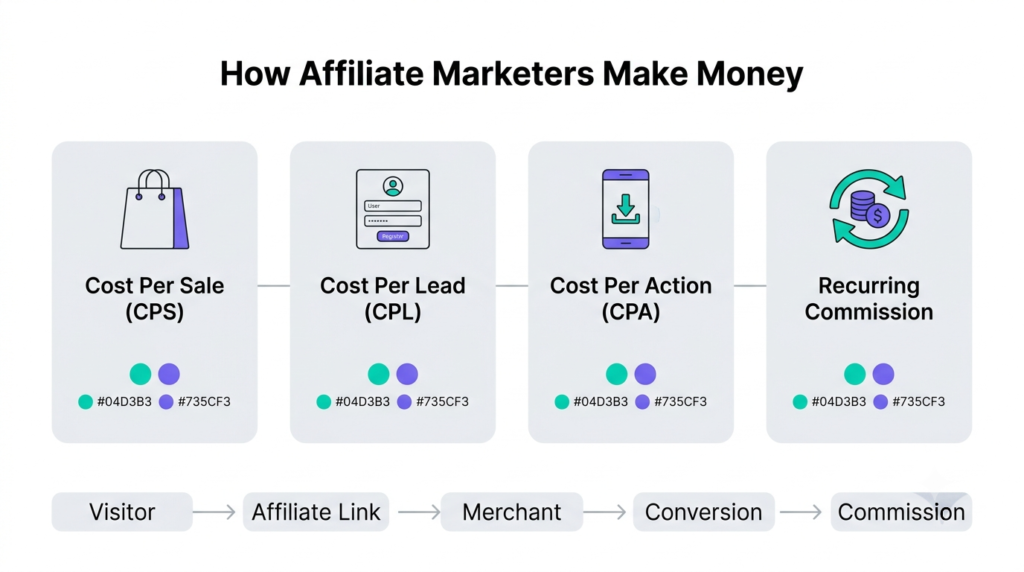
1. Cost Per Sale (CPS)
This is the most common affiliate commission model.
You earn money only when someone purchases a product through your affiliate link.
For example, if you recommend a $100 product with a 10% commission, you’ll earn $10 after the sale is successfully tracked.
This model is commonly used by online stores, software companies, travel websites, and subscription services.
2. Cost Per Lead (CPL)
Some companies don’t require a purchase. Instead, they pay affiliates when visitors complete a valuable action, such as:
- Creating an account
- Requesting a quote
- Signing up for a free trial
- Submitting a contact form
- Joining a newsletter
This model is popular in finance, insurance, education, and SaaS industries.
3. Cost Per Action (CPA)
CPA programs pay whenever a visitor completes a specific action defined by the advertiser.
Depending on the offer, that action might include:
- Installing a mobile app
- Downloading software
- Registering for a website
- Completing a survey
- Starting a subscription
Many beginner-friendly affiliate programs use CPA offers because they don’t always require visitors to spend money.
4. Recurring Commissions
Some affiliate programs continue paying commissions every month for as long as the customer keeps their subscription active.
This is common with:
- Web hosting companies
- Email marketing software
- VPN services
- Project management tools
- SEO software
- AI tools
Recurring commissions can create predictable monthly income because a single referral may continue generating earnings for months or even years.
Can You Make $10,000 a Month with Affiliate Marketing?
Yes, it’s possible—but it doesn’t happen overnight.
Many successful affiliates eventually earn far more than $10,000 per month, but they usually reach that level after building valuable content, growing steady traffic, and earning the trust of their audience.
What most people don’t see is the work happening behind the scenes.
Successful affiliates often spend months writing articles, creating videos, improving SEO, testing offers, and learning from failed campaigns before their income becomes consistent.
Affiliate marketing should be viewed as building a real business, not as a shortcut to quick money.
The people who succeed are usually those who focus on helping their audience first. Sales naturally follow when visitors trust your recommendations.
How Much Can Beginners Expect to Earn?
There is no fixed income because every affiliate’s journey is different.
Some beginners earn their first commission within a few weeks, while others may need several months before seeing meaningful results.
Your income depends on factors such as:
- The quality of your content
- Your website or social media traffic
- The products you promote
- Your audience’s buying intent
- Your SEO and marketing skills
- Your consistency over time
Rather than focusing on earning thousands of dollars immediately, aim for your first commission. That first successful referral proves your system works, and from there you can improve and scale gradually.
How to Start Affiliate Marketing With No Money
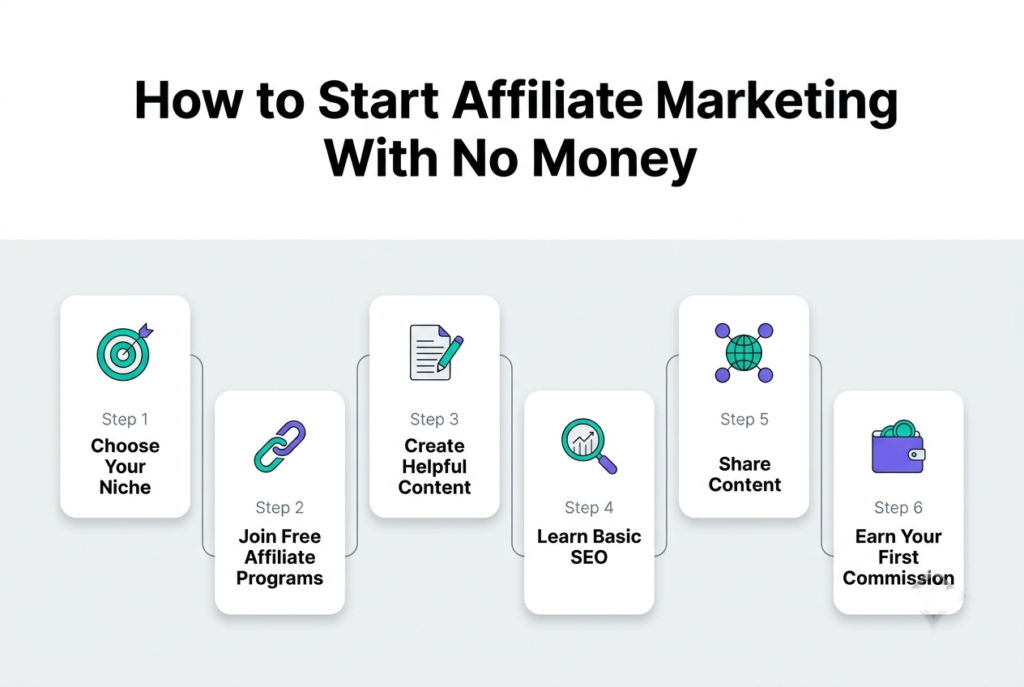
Step 1: Choose a Niche You Can Write About for Years
The biggest mistake beginners make is promoting everything they see. Instead, choose one niche that genuinely interests you. This makes creating content much easier and helps you build authority over time. Popular affiliate marketing niches include:- Technology
- Software & SaaS
- Web Hosting
- Health & Wellness
- Beauty
- Finance
- Travel
- Gaming
- Education
- Home & Lifestyle
Step 2: Join Trusted Affiliate Programs
After selecting your niche, the next step is joining reputable affiliate programs or publisher platforms. Many beginners start with well-known affiliate networks such as Amazon Associates, CJ Affiliate, Impact, ShareASale, Awin, Rakuten Advertising, or PartnerStack.Many beginners start with trusted affiliate programs that offer reliable tracking, transparent reporting, and products relevant to their niche. Before joining any program, always review its commission structure, cookie duration, payment schedule, and approval requirements.
Step 3: Create Content That Actually Helps People
Affiliate marketing is not about placing affiliate links everywhere. It’s about solving problems. Create content that answers questions people are already searching for. Some of the best-performing content formats include:- Product reviews
- Comparison articles
- Buying guides
- How-to tutorials
- Coupon pages
- Best product lists
- Frequently asked questions
Step 4: Learn Basic SEO
If you’re building a website, learning Search Engine Optimisation (SEO) is one of the best long-term investments you can make. SEO helps your articles appear in Google search results without paying for ads. Start by learning:- Keyword research
- Writing high-quality content
- Internal linking
- Image optimisation
- Page speed
- User experience
How to Start Affiliate Marketing With Your Phone
If you don’t own a laptop yet, don’t let that stop you. Many creators build their first audience using only a smartphone. You can create videos, design graphics, respond to followers, publish social media content, and even monitor your affiliate performance directly from your phone. With a smartphone, you can:- Create YouTube Shorts
- Upload TikTok videos
- Design Pinterest Pins
- Post Instagram Reels
- Manage Facebook Pages
- Track affiliate commissions
- Communicate with affiliate managers
Free Affiliate Marketing Websites for Beginners
If buying a domain isn’t possible right now, you can still begin building an audience using free platforms.- YouTube
- Medium
- LinkedIn Articles
- Facebook Pages
- TikTok
- Quora
Best Affiliate Marketing Websites to Learn and Grow
One lesson I learned early on is that learning from trusted sources saves months of trial and error. Some excellent websites for improving your affiliate marketing skills include:- Ahrefs Blog
- Backlinko
- Authority Hacker
- Niche Pursuits
- Search Engine Journal
- HubSpot Blog
- Google Search Central
How Do I Start Working in Affiliate Marketing?
If you’re starting from scratch, keep the process simple.-
- Choose one niche.
- Join a trusted affiliate program or publisher platform.
- Create genuinely helpful content.
- Learn basic SEO or social media marketing.
- Build trust with your audience.
- Track your performance.
- Improve your content continuously.
- Repeat the process consistently.
Choosing the Right Affiliate Platform
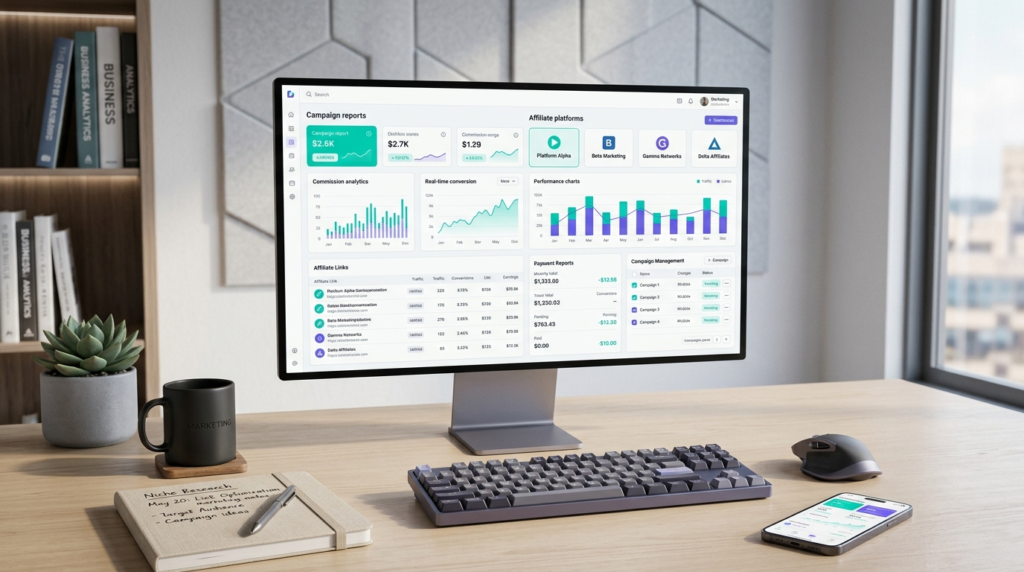
One of the biggest mistakes I made when starting affiliate marketing was joining every affiliate program I could find. I thought having hundreds of products would automatically increase my earnings. The opposite happened. My dashboard became difficult to manage, I promoted products I barely understood, and my content lost focus. Over time, I learned that successful affiliate marketers don’t join every program they come across. They choose reliable affiliate platforms that genuinely fit their niche and audience. If you’re just getting started, focus on quality rather than quantity. There are thousands of affiliate programs and platforms available today. Instead of joining every program you find, focus on platforms that offer reliable tracking, transparent reporting, quality advertisers, and dependable commission payments. The best affiliate platform isn’t necessarily the one with the biggest name. It’s the one that provides campaigns relevant to your audience while making it easy to manage your partnerships and monitor your performance.How to Choose the Right Affiliate Program
Instead of asking, “Which program pays the highest commission?“, ask yourself a better question: “Which products genuinely help my audience?” When choosing an affiliate program, consider:- Whether the product matches your niche.
- The reputation of the company.
- Commission rates.
- Cookie duration.
- Conversion rate.
- Payment reliability.
- Publisher support.
- Tracking accuracy.
How to Learn Affiliate Marketing Faster
When I started affiliate marketing, I wasted a lot of time jumping from one YouTube video to another. Every creator seemed to have a different strategy. One person said blogging was the future, another insisted on YouTube, while someone else claimed social media was the only way to succeed. Eventually, I realised that the fastest way to learn affiliate marketing wasn’t by consuming endless content—it was by taking action. Publishing one helpful article taught me more than watching fifty videos. If you’re serious about becoming an affiliate marketer, focus on building practical skills instead of chasing shortcuts.A Simple Learning Roadmap
- Understand how affiliate marketing works.
- Choose a niche that genuinely interests you.
- Create helpful content consistently.
- Learn basic SEO to attract free traffic.
- Study your website analytics to understand visitor behaviour.
- Test different affiliate offers and placements.
- Improve your content based on real results.
The best way to learn affiliate marketing is by publishing content consistently, analysing your results, and improving over time. Every article, video, or campaign teaches something valuable that no course can replace.
Search engines, affiliate programs, and online marketing strategies continue evolving. Successful affiliates keep learning, testing new ideas, and adapting instead of relying on techniques that worked years ago.
The more experience you gain, the easier it becomes to identify opportunities, choose better offers, and create content that genuinely helps people while generating long-term income.
How Affiliate Marketing Works to Make Money (Real Example)
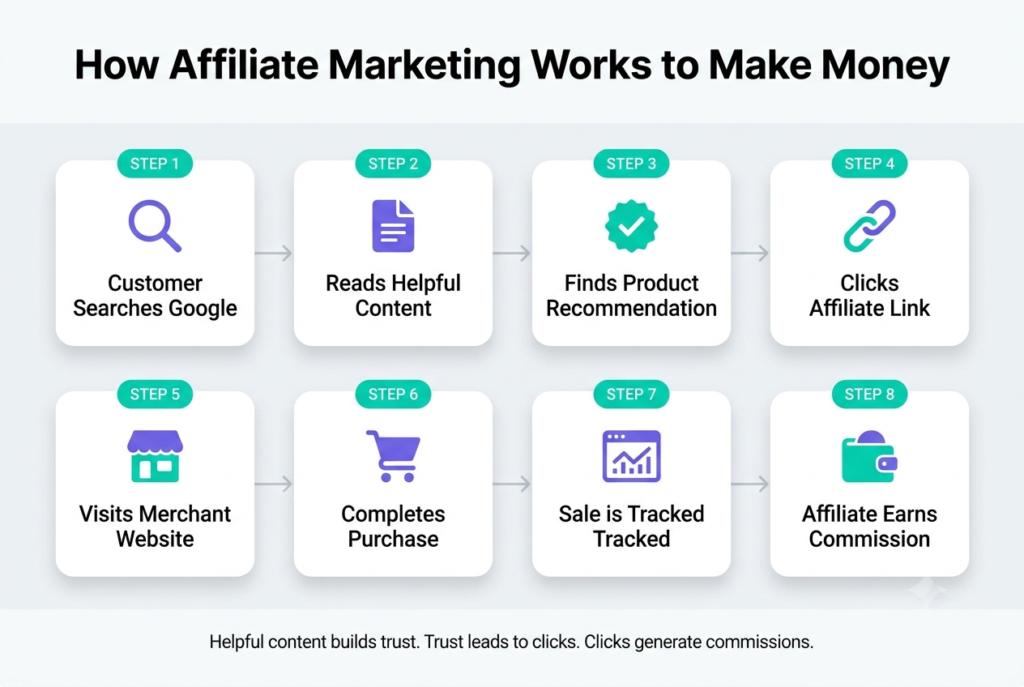
Now that you understand the basics, let’s look at how affiliate marketing works in a real situation.
Imagine someone searches Google for “best wireless earbuds under $100”. They aren’t browsing for fun—they’re already interested in buying a product.
If you’ve published a detailed buying guide comparing the best options, your article has a chance of appearing in the search results.
The visitor clicks your article, reads your recommendations, compares the products, and decides which earbuds are the best fit for their needs.
When they click your affiliate link and complete their purchase, the merchant records that sale through your unique tracking ID, and you receive a commission.
The customer pays the same price they would have paid anyway. Your commission comes from the merchant’s marketing budget because you helped them acquire a customer.
Example of the Complete Affiliate Marketing Journey
- A customer searches for a product online.
- Your helpful content appears in Google or on social media.
- The customer reads your article or watches your video.
- They trust your recommendation.
- They click your affiliate link.
- The merchant tracks the referral.
- The customer completes the purchase.
- You earn a commission.
Why Helpful Content Makes More Money
Many beginners think affiliate marketing is about placing as many links as possible. In reality, people click affiliate links because they trust the content around them.
A detailed buying guide, an honest review, or a comparison article usually performs much better than a page filled with promotional links.
The more useful your content is, the more likely visitors are to return, recommend your website to others, and purchase through your links in the future.
Building Long-Term Affiliate Income
One article rarely changes everything. Most successful affiliate marketers build their income by publishing helpful content consistently over time.
Each quality article becomes another opportunity to attract visitors from search engines, social media, and referrals. As your content library grows, your chances of earning commissions increase as well.
This is why experienced affiliates focus on creating evergreen content that continues attracting readers for months or even years after it is published.
The more helpful your content becomes, the more likely visitors are to trust your recommendations. Long-term affiliate success comes from solving real problems—not from promoting as many products as possible.
Frequently Asked Questions About Affiliate Marketing
Is Affiliate Marketing Worth It for Beginners?
Yes. Affiliate marketing remains one of the best online business models for beginners because you don’t need to create your own products or manage customer support. Success depends on learning useful skills, creating valuable content, and staying consistent.
How Long Does It Take to Earn Your First Commission?
There is no fixed timeline. Some beginners earn their first commission within a few weeks, while others may take several months. The biggest factors are the quality of your content, your traffic, your niche, and how consistently you publish new content.
Do I Need a Website to Start Affiliate Marketing?
No. A website is highly recommended for long-term growth, but it isn’t the only option. Many affiliates begin using YouTube, Pinterest, Instagram, Facebook, TikTok, or email newsletters before building their own website.
Is Affiliate Marketing Free to Start?
Yes. Many affiliate programs are completely free to join, and you can begin by creating content on free platforms. As your business grows, you can invest in your own website, hosting, SEO tools, and paid marketing if needed.
Which Affiliate Marketing Niche Is Best?
The best niche is one that combines your interest, strong audience demand, and products people regularly purchase. Popular niches include technology, software, personal finance, travel, health and fitness, education, web hosting, online business, and home improvement.
Can I Promote More Than One Affiliate Program?
Absolutely. Most successful affiliates work with multiple trusted programs so they can recommend the best products for different situations. The key is choosing products that genuinely help your audience instead of promoting everything available.
How Important Is SEO in Affiliate Marketing?
SEO is one of the most valuable skills an affiliate marketer can learn. Well-optimized articles can attract targeted visitors from search engines for months or even years, allowing you to earn commissions long after the content has been published.
Can Beginners Join LinkDividend?
Yes. If you create quality content through a website, blog, YouTube channel, or social media, you can apply to join LinkDividend. Once approved, you’ll gain access to carefully selected campaigns from trusted advertisers, making it easier to find offers that match your audience and content niche.
Final Thoughts: Your Affiliate Marketing Journey Starts Today
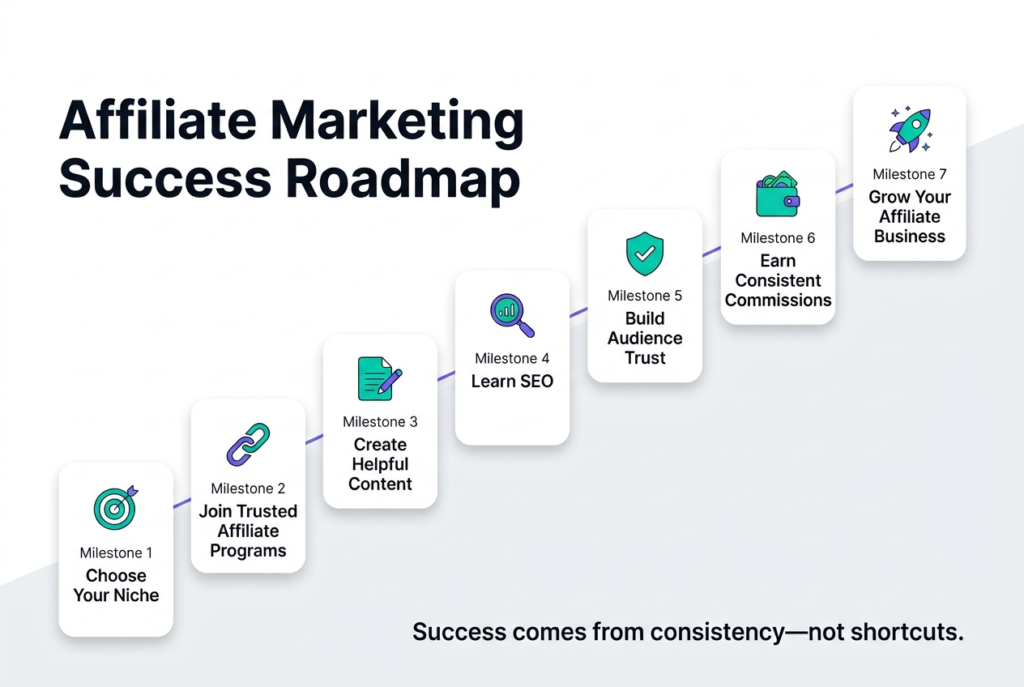
Your Affiliate Marketing Action Plan
- Choose a niche that genuinely interests you.
- Join a trusted affiliate program or network.
- Create valuable, people-first content.
- Learn the basics of SEO.
- Share your content consistently.
- Track your results and improve over time.
- Focus on helping people before trying to sell.
Disclosure: This guide may contain affiliate links. If you purchase through these links, we may earn a commission at no additional cost to you. We only recommend products and services we genuinely believe provide value.
Building a Successful Affiliate Marketing Business Takes Time
If there's one lesson I've learned from affiliate marketing, it's that success rarely comes from shortcuts.
Many beginners focus on finding the highest-paying affiliate programs, the fastest traffic source, or the latest growth hack. But the affiliates who consistently earn commissions month after month usually focus on something much simpler: helping people solve problems.
Whether you're writing blog posts, creating videos, publishing coupon offers, sharing content on social media, or building an email list, your long-term success depends on the value you provide to your audience.
Start small. Learn the fundamentals. Publish useful content consistently. Improve your skills over time. Every successful affiliate marketer started with zero traffic, zero commissions, and zero experience at some point.
The first commission often feels small, but it proves something important: the system works. Once you understand the process, you can improve, scale, and build a sustainable online business around it.
Looking for Quality Affiliate Opportunities?
Platforms like LinkDividend help publishers, bloggers, influencers, content creators, and agencies discover carefully selected campaigns through a single platform while maintaining transparent reporting, reliable tracking, and long-term advertiser relationships.
The goal isn't simply to find more affiliate links—it's to build partnerships that create value for both advertisers and publishers.
Ready to Start Your Affiliate Marketing Journey?
Focus on creating valuable content, building trust with your audience, and learning from every campaign. Small improvements made consistently can produce remarkable results over time.
Explore LinkDividend