
“Why aren’t you using an affiliate network instead?”That question completely changed the way I managed affiliate campaigns. Within a few weeks I realised I could manage dozens of advertisers from one dashboard instead of maintaining separate accounts for every company. Click tracking became easier, reporting became clearer, and commission management stopped feeling like a full-time administrative job. If you’re new to affiliate marketing, you’re probably wondering exactly the same thing I wondered: What is an affiliate network, and why do experienced affiliate marketers rely on them? This guide explains everything in simple language, including how affiliate networks work, how they differ from individual affiliate programs, when you should use them, their advantages and disadvantages, and how to choose the right one for your business in 2026.
What Is an Affiliate Network?
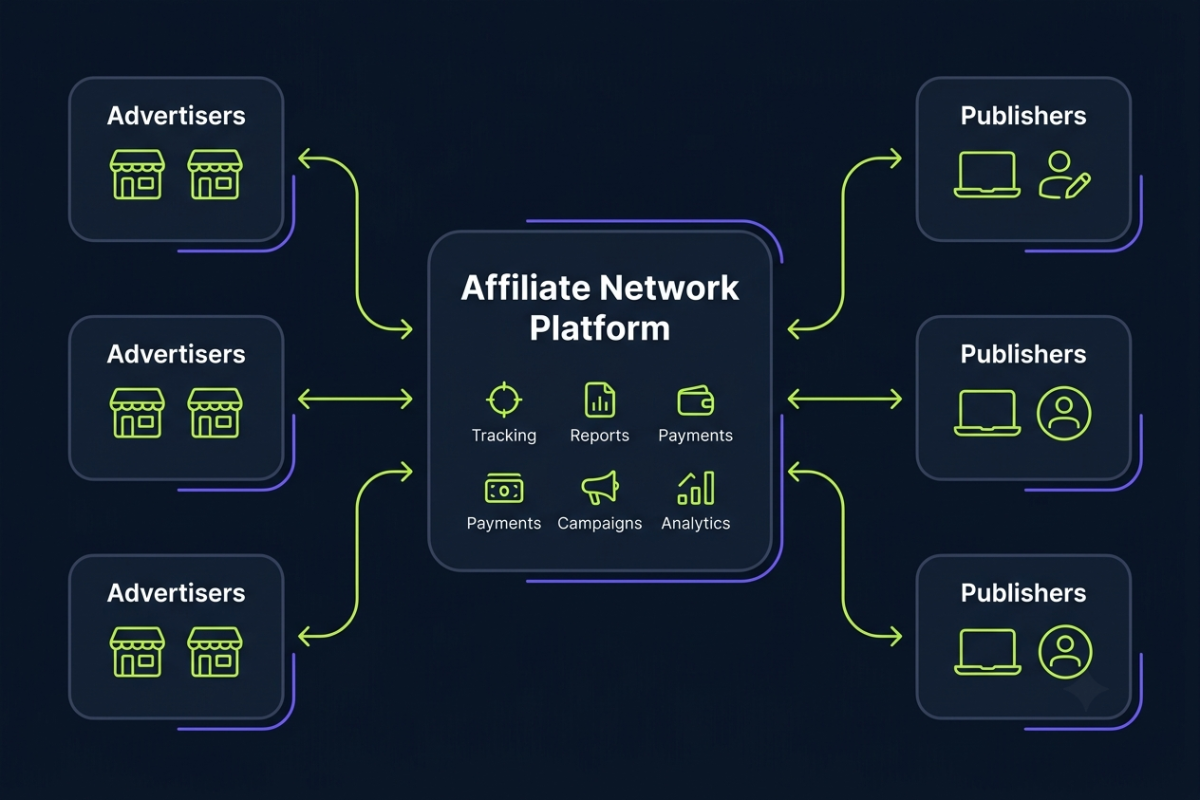
An affiliate network is a platform that connects two groups:
- Advertisers who want to promote their products or services
- Publishers, bloggers, influencers, agencies, coupon websites, and content creators who want to earn commissions by promoting those products
Instead of contacting hundreds of companies individually, publishers join one network and gain access to thousands of campaigns from multiple advertisers.
The affiliate network also handles many of the technical tasks behind the scenes, including:
- Tracking affiliate clicks
- Recording conversions
- Calculating commissions
- Generating reports
- Managing advertiser approvals
- Processing publisher payments
Think of it like a shopping mall.
The mall doesn’t manufacture products itself. Instead, it brings hundreds of different stores together under one roof, making everything easier for shoppers.
An affiliate network does something very similar for affiliate marketing. Instead of visiting dozens of individual advertiser websites, publishers can discover campaigns, generate tracking links, monitor performance, and receive payments from one central platform.
That convenience becomes increasingly valuable as your affiliate business grows.
How Affiliate Networks Actually Work (Step by Step)
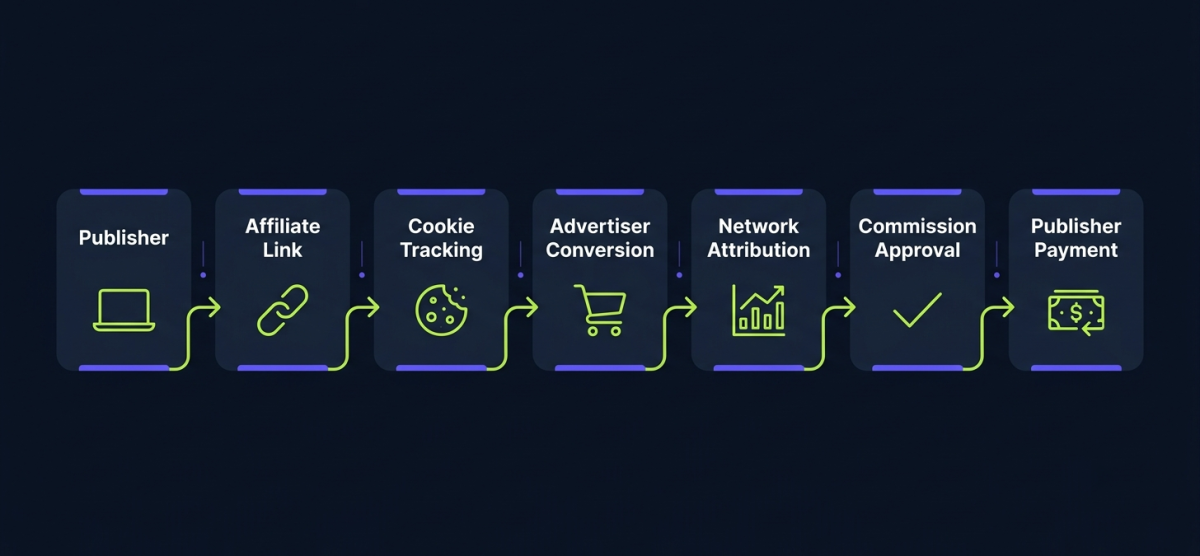
Once I joined my first network, I expected it to be complicated. Honestly, the dashboard looked overwhelming for about fifteen minutes. But after running a few campaigns, I realised almost every network follows the same basic workflow.
Understanding this workflow is important because it explains how affiliate commissions are tracked and paid.
Step 1 — You Join the Network
The first step is applying to the affiliate network itself. Most networks review your website, content quality, traffic sources, and whether your promotion methods comply with their policies.
Good networks want real publishers, not spam accounts.
Typical information requested includes:
- Your website URL
- Traffic sources (SEO, YouTube, Pinterest, social media, email, etc.)
- Primary niche
- Country of operation
- Estimated monthly visitors
Approval is often free, but not always automatic.
Step 2 — You Browse Available Campaigns
After approval, you gain access to a campaign marketplace.
This is where advertisers list their affiliate offers.
You can usually filter campaigns by:
- Category (SaaS, finance, e-commerce, travel, hosting, etc.)
- Commission rate
- Payout type (CPA, CPS, CPL, recurring)
- Country availability
- Cookie duration
- Conversion performance
For example, a publisher writing about business software might browse only SaaS campaigns with recurring commissions.
Step 3 — You Apply to Individual Advertisers
This is the part many beginners misunderstand.
Being approved by the network does not mean you’re automatically approved for every advertiser inside it.
Advertisers often review applications manually because they want publishers whose audience matches their product.
A finance company may reject a gaming website, while a VPN advertiser may happily approve it.
Step 4 — The Network Generates Your Tracking Link
Once approved, the network creates a unique affiliate tracking link for you.
This link contains identifiers that tell the network:
- Which publisher sent the visitor
- Which campaign was clicked
- Which content piece generated the click
- Which commission account should receive credit
Every click passes through the network’s tracking infrastructure before reaching the advertiser.
Step 5 — Cookie Tracking Records the Referral
When a visitor clicks your affiliate link, the network typically places a tracking cookie in the visitor’s browser.
This cookie stores information about the referral.
Example:
- Visitor clicks your VPN review today
- Leaves the website without purchasing
- Returns three days later and buys the VPN
- The cookie tells the network that your referral generated the sale
The length of time that referral remains eligible is called the cookie duration.
Common cookie windows are 24 hours, 30 days, 60 days, or even 90+ days for some SaaS programmes.
Step 6 — Conversion Attribution Happens Automatically
After the purchase, signup, or lead submission occurs, the advertiser sends a conversion signal back to the network.
The network then attributes the conversion to the correct publisher account.
This is why reliable tracking matters so much.
If attribution fails, commissions can be lost.
Established networks invest heavily in:
- Server-to-server tracking
- Postback tracking
- Cross-device attribution
- Fraud detection
- Duplicate conversion prevention
Step 7 — Commissions Appear in Your Dashboard
Once the conversion is validated, the commission appears in your reporting dashboard.
Most networks show metrics such as:
- Clicks
- Unique clicks
- Conversions
- Conversion rate
- Earnings Per Click (EPC)
- Revenue by campaign
- Revenue by traffic source
- Pending vs approved commissions
This reporting is one of the biggest advantages of using a network instead of manually tracking dozens of individual programmes.
Step 8 — Payment Is Processed by the Network
Finally, the network aggregates commissions from multiple advertisers and pays you through a single payment system.
Instead of receiving separate payments from ten different companies, you usually receive one consolidated payout.
Common payout methods include:
- Bank transfer
- Payoneer
- Wise
- ACH transfer
- Wire transfer
- PayPal (where supported)
As someone operating from Pakistan, I personally pay close attention to networks that support Payoneer payouts, because not every international network offers payment methods that are practical for publishers in our region.
The Part That Surprised Me Most
What surprised me after a few months wasn’t the tracking technology—it was how much time I had been wasting before using a network.
Previously I was:
- Logging into multiple advertiser accounts daily
- Downloading separate reports
- Reconciling commissions manually
- Checking different payment thresholds
- Updating expired links by hand
With a centralised dashboard, campaign management became much more scalable.
That scalability is exactly why larger publishers, coupon websites, comparison sites, influencers, agencies, and performance marketers rarely manage dozens of advertiser relationships entirely manually.
Many eventually adopt a publisher platform that sits on top of affiliate network relationships and provides an additional layer of campaign discovery, reporting, tracking, and payment management.
For example, LinkDividend is designed around this publisher workflow—helping publishers discover relevant campaigns from trusted affiliate network partners, monitor clicks and conversions, manage commissions, and handle reporting from a single dashboard instead of juggling multiple network logins.
The important distinction is that a publisher platform doesn’t replace affiliate marketing fundamentals. You still need quality content, targeted traffic, and genuine audience trust. What it can do is reduce the operational complexity that tends to slow publishers down as they start scaling beyond a handful of affiliate campaigns.
Affiliate Networks vs Individual Affiliate Programs
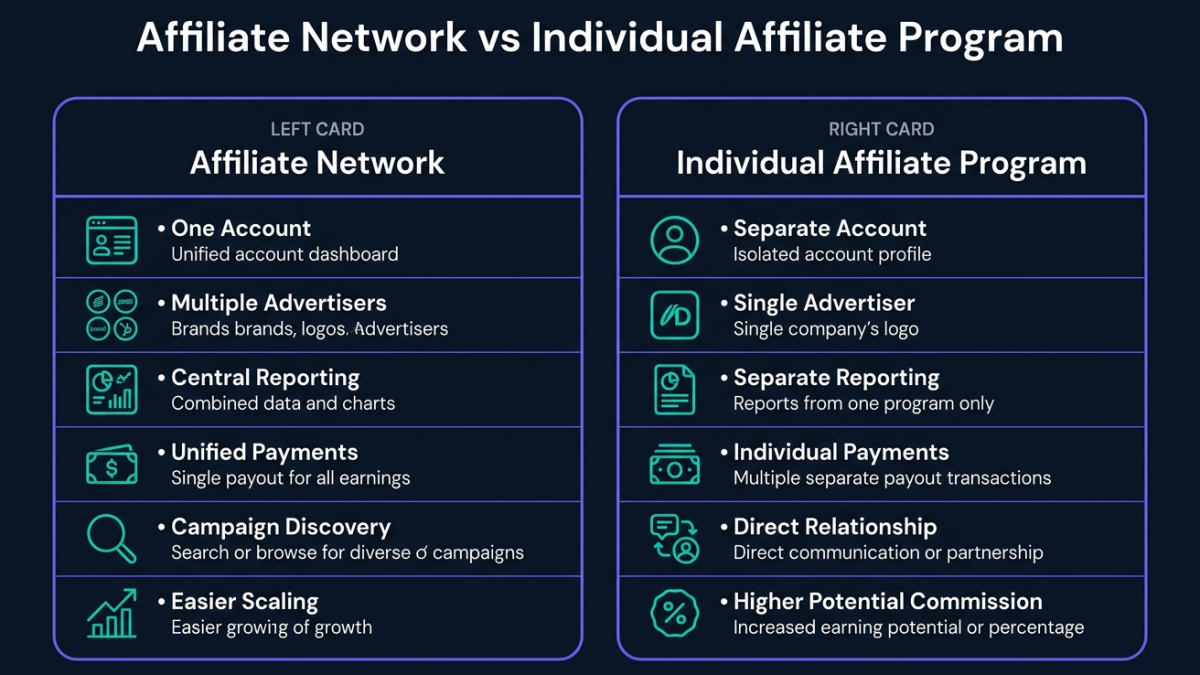
One of the biggest turning points in my affiliate marketing journey came when I finally understood that an affiliate network and an individual affiliate program are not the same thing.
Before that, I assumed every advertiser worked exactly the same way. I would visit a company’s website, look for an “Affiliates” page, submit an application, wait for approval, and then repeat the entire process for the next brand.
That approach works when you’re promoting one or two products. But once your website starts covering multiple topics, managing dozens of separate advertiser accounts quickly becomes overwhelming.
That’s where affiliate networks begin to show their real value.
What Is an Individual Affiliate Program?
An individual affiliate program is managed directly by a single company.
For example, if a software company operates its own affiliate program, you’ll usually:
- Create an account directly with that company.
- Receive your own tracking links.
- View reports inside their dashboard.
- Receive payments directly from them.
Everything happens between you and that one advertiser.
This approach gives you a closer relationship with the brand, and in many cases, slightly higher commission rates because there isn’t an affiliate network involved.
What Is an Affiliate Network?
An affiliate network acts as an intermediary between advertisers and publishers.
Instead of creating separate accounts for dozens of advertisers, you register once with the network and then apply to individual campaigns inside that platform.
The network handles most of the technical work, including:
- Tracking affiliate clicks
- Cookie management
- Conversion attribution
- Commission reporting
- Payment processing
- Fraud prevention
For publishers promoting products from multiple companies, this saves an enormous amount of time.
Major Differences
| Affiliate Network | Individual Affiliate Program |
|---|---|
| One account gives access to many advertisers. | One account only works for one advertiser. |
| Centralized reporting dashboard. | Separate dashboard for every company. |
| Single payment schedule. | Each advertiser has its own payment terms. |
| Easier campaign discovery. | You must search for programs individually. |
| Ideal for publishers managing many campaigns. | Ideal when working closely with one specific brand. |
Advantages of Affiliate Networks
After using both models, I found affiliate networks offered several practical advantages.
- Access to hundreds or even thousands of advertisers from one account.
- One reporting dashboard instead of managing multiple logins.
- Centralized click, conversion, and commission tracking.
- Simplified payment management.
- Easier campaign discovery when expanding into new niches.
- Professional fraud detection and tracking systems.
- Dedicated publisher support teams.
These advantages become increasingly important as your affiliate business grows.
Advantages of Individual Affiliate Programs
That doesn’t mean individual affiliate programs are always the wrong choice.
Many experienced publishers still work directly with advertisers because direct relationships often provide:
- Higher commission rates.
- Exclusive promotional offers.
- Custom coupon codes.
- Dedicated affiliate managers.
- Faster communication with the advertiser.
- Greater flexibility during promotional campaigns.
If one product represents a major portion of your revenue, building a direct relationship with that advertiser can be extremely valuable.
Which Option Should Beginners Choose?
If you’re just starting affiliate marketing, I usually recommend beginning with a reputable affiliate network.
Why?
Because it allows you to learn campaign management, tracking, reporting, and optimization without constantly creating new advertiser accounts.
As your website grows, you can gradually build direct relationships with brands that consistently perform well for your audience.
My own approach today is simple: I work directly with a handful of advertisers that generate significant revenue, while using affiliate networks and publisher platforms to manage the rest of my campaigns efficiently.
Best Affiliate Networks (And What Each Is Actually Good For)
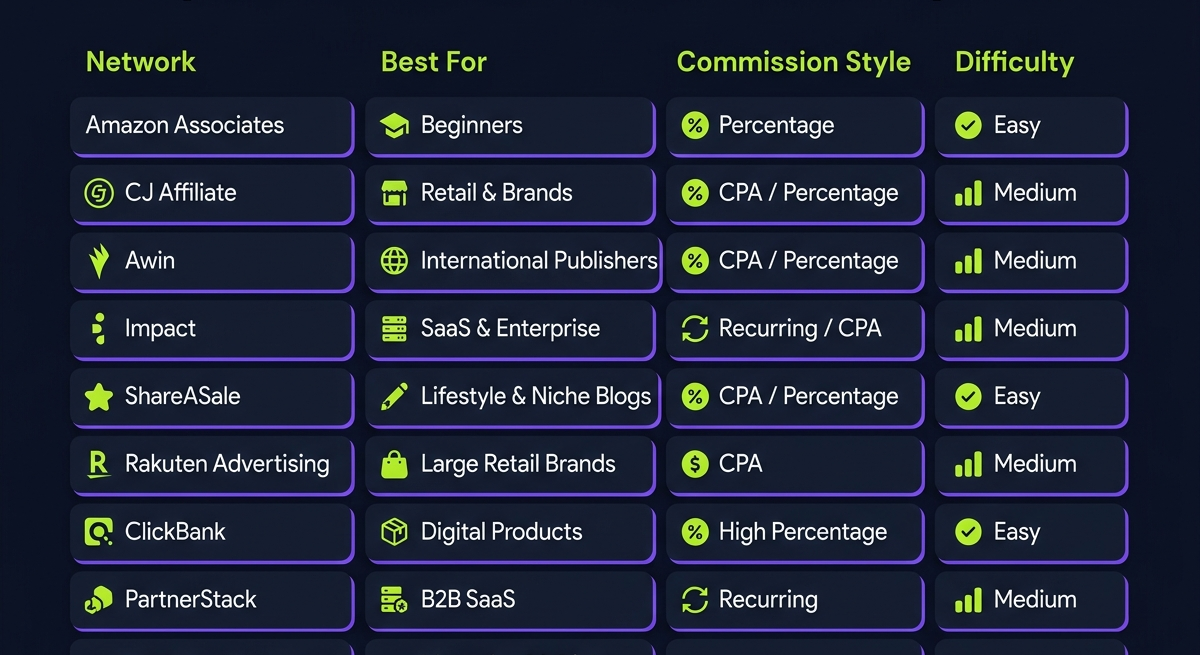
Once I understood how affiliate networks worked, the next challenge was figuring out which one I should actually join. That turned out to be a much harder decision than I expected.
Every article I found claimed to list the “best affiliate networks,” but almost all of them simply repeated the same names without explaining why someone should choose one over another.
The truth is that there isn’t a single affiliate network that’s perfect for everyone.
The best network depends on several factors, including:
- Your niche
- Your traffic source
- Your audience’s location
- The products you want to promote
- Your experience level
Someone running a software review website will usually benefit from completely different advertisers than someone operating a fashion blog or coupon website.
Instead of asking “Which affiliate network pays the most?” it’s usually smarter to ask:
“Which network offers the advertisers that match my audience?”
That simple shift in thinking helped me choose programs that converted far better, even when the commission percentage looked slightly lower.
Amazon Associates
Although Amazon Associates is technically an individual affiliate program rather than a traditional affiliate network, almost every beginner encounters it first.
Its biggest strengths are obvious:
- Millions of products
- Easy approval process
- High customer trust
- Excellent conversion rates
The downside is that commission rates are relatively low compared to many specialist affiliate programs.
It’s an excellent place to learn affiliate marketing, but many experienced publishers eventually diversify into higher-paying programs.
CJ Affiliate
CJ Affiliate (formerly Commission Junction) is one of the oldest and most established affiliate networks in the industry.
You’ll find advertisers across categories such as:
- Retail
- Travel
- Finance
- Technology
- Home improvement
- Business services
Many internationally recognised brands manage their affiliate programs through CJ, making it attractive for publishers looking for reputable advertisers.
Awin
If your audience comes from multiple countries rather than just one market, Awin deserves serious consideration.
It has a particularly strong presence across Europe while also supporting merchants from North America and other regions.
For publishers creating international content, Awin often provides more regional advertiser choices than some US-focused networks.
Impact
Impact has become increasingly popular among SaaS companies, subscription services, and enterprise brands.
Many businesses prefer Impact because its partnership management tools are highly flexible.
For publishers, that usually means:
- Reliable tracking
- Professional reporting
- Strong advertiser communication
- High-value campaigns
You’ll frequently encounter Impact when promoting software products, online services, and digital subscriptions.
ShareASale
ShareASale has built a reputation for offering a healthy mix of smaller merchants alongside well-established brands.
Lifestyle publishers, bloggers, and niche websites often find suitable advertisers here because the merchant catalogue covers thousands of specialised products rather than only global companies.
The interface isn’t the newest you’ll ever see, but the range of advertisers remains one of its biggest strengths.
Rakuten Advertising
Rakuten Advertising works with many premium retail brands and large online stores.
Publishers targeting shopping, fashion, lifestyle, and consumer products often discover advertisers here that aren’t available through every other network.
Approval standards can sometimes be higher than beginner-focused platforms, but the quality of advertisers is generally excellent.
ClickBank
ClickBank is different from many traditional affiliate networks because it focuses heavily on digital products.
Typical categories include:
- Online courses
- Fitness programs
- Self-improvement products
- Business education
- Digital downloads
Commission percentages are often significantly higher than physical products.
However, publishers should carefully evaluate product quality before recommending anything to their audience.
Your reputation is worth far more than a high commission.
PartnerStack
PartnerStack specialises almost entirely in B2B software and SaaS partnerships.
If your audience consists of businesses, agencies, freelancers, or technology professionals, PartnerStack can become one of your most valuable affiliate resources.
Many software companies running recurring subscription models choose PartnerStack because it supports long-term partnership relationships exceptionally well.
Publisher Platforms Like LinkDividend
As publishers grow, another challenge appears.
Managing campaigns across several different affiliate networks quickly becomes time-consuming.
Instead of logging into multiple dashboards every day, many publishers now use publisher platforms that centralise campaign discovery, reporting, and payment management.
For example, LinkDividend enables publishers, bloggers, influencers, agencies, and content creators to discover campaigns from trusted affiliate network partners while monitoring clicks, conversions, commissions, and advertiser performance through a single dashboard.
Rather than replacing affiliate networks, publisher platforms help simplify campaign management as your affiliate business grows.
Think of an affiliate network as a shopping mall full of advertisers. A publisher platform is like your personal dashboard that helps you manage campaigns from multiple shopping malls without constantly travelling between them.
How to Choose the Right Affiliate Network for Your Website
When I first joined affiliate marketing, I made the mistake most beginners make—I believed the biggest affiliate network would automatically be the best choice.
It sounded logical. Bigger network. More advertisers. More opportunities.
But after spending several months testing different networks, I realised something important.
The best affiliate network isn’t the one with the largest number of advertisers. It’s the one that fits your website, your audience, and the products your visitors are actually looking for.
A network that performs brilliantly for a technology blog may produce almost no revenue for a fashion website. Likewise, a network designed for enterprise SaaS products isn’t always the right choice for someone running a coupon website focused on retail brands.
Choosing the right network is less about popularity and more about compatibility.
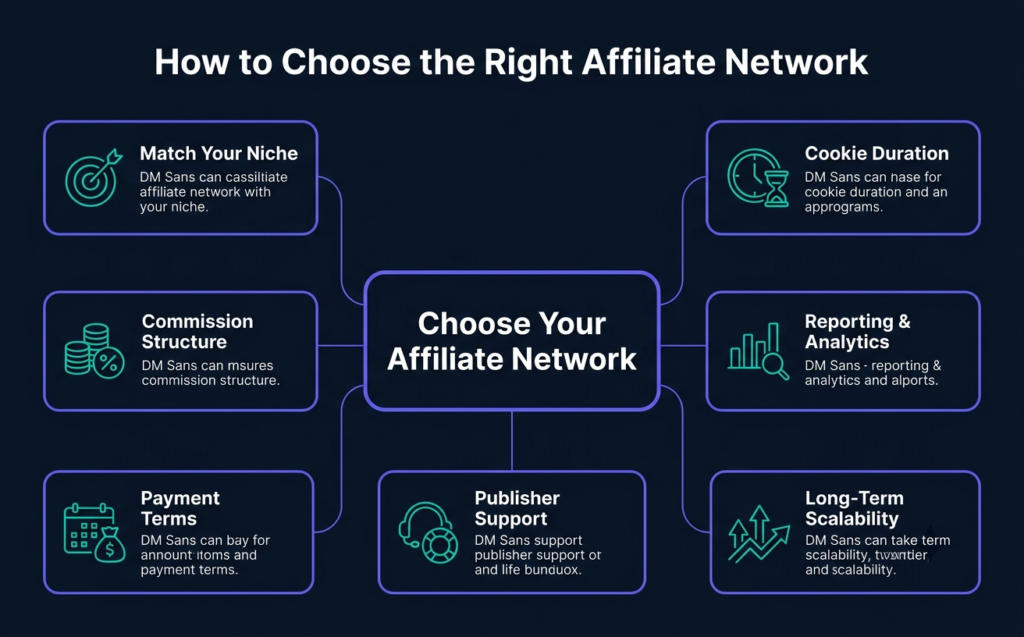
1. Match the Network to Your Niche
The first thing I always recommend is checking whether the network has advertisers that genuinely fit your content.
For example:
- Technology websites usually perform well with SaaS, hosting, cybersecurity, and software advertisers.
- Coupon websites need retailers offering active discount campaigns.
- Finance blogs should prioritise banking, investment, insurance, and financial service advertisers.
- Lifestyle publishers often benefit from fashion, travel, beauty, and home brands.
- Business blogs generally perform better with CRM platforms, productivity software, automation tools, and cloud services.
If your audience isn’t interested in the advertisers available inside the network, even the highest commission rates won’t help.
2. Evaluate Commission Structures
Not every commission model works the same way.
Most affiliate campaigns fall into one of these categories:
- CPA (Cost Per Acquisition) — Fixed commission after a successful sale or qualified action.
- Revenue Share — Percentage of the customer’s purchase.
- Recurring Commission — Monthly or yearly commission while the customer remains active.
- CPL (Cost Per Lead) — Payment for qualified registrations or enquiries.
Personally, recurring commissions have become my favourite because they create predictable monthly income rather than relying entirely on new sales.
3. Check Cookie Duration
Cookie duration is something many beginners ignore.
Imagine two advertisers:
- Advertiser A offers a 24-hour cookie.
- Advertiser B offers a 90-day cookie.
If a visitor clicks both affiliate links today but only purchases next month, only Advertiser B would usually credit the commission.
Longer cookie durations generally provide better earning opportunities, especially for products requiring more research before purchase.
4. Review Reporting and Analytics
A modern affiliate dashboard should make it easy to understand what’s happening with your campaigns.
I normally look for reporting features such as:
- Real-time click tracking
- Conversion reporting
- Earnings Per Click (EPC)
- Conversion rate
- Pending and approved commissions
- Payment history
- Campaign performance reports
Good reporting helps you identify which pages deserve additional SEO work and which campaigns aren’t worth promoting.
5. Understand the Payment Terms
Every network has its own payment schedule.
Before joining, always check:
- Minimum payout threshold
- Payment frequency
- Available payment methods
- Supported countries
- Currency options
Nothing is more frustrating than generating commissions only to discover you haven’t reached the network’s minimum payout requirement.
6. Look at Publisher Support
Responsive support becomes increasingly valuable as your business grows.
Quality affiliate networks usually provide:
- Dedicated affiliate managers
- Technical assistance
- Campaign recommendations
- Performance optimisation advice
- Fraud protection
- Compliance guidance
Fast support can save hours whenever tracking or campaign approval issues arise.
7. Consider Long-Term Scalability
Many publishers begin with one or two advertisers.
Within a year, they may be promoting fifty.
This is where scalability matters.
Managing dozens of advertiser dashboards individually becomes time-consuming.
Many experienced publishers eventually move toward publisher platforms that consolidate campaigns, reporting, and payment management into one interface.
For example, platforms like LinkDividend allow publishers to discover campaigns from trusted affiliate network partners while monitoring clicks, conversions, commissions, and reporting from a single dashboard. Instead of replacing affiliate networks, these platforms simplify campaign management as your affiliate business grows.
Choosing the right affiliate network isn’t about finding the biggest brand—it’s about finding the platform that helps your audience discover products they’ll genuinely benefit from.
Signs You’ve Chosen the Wrong Affiliate Network
Sometimes the easiest way to evaluate a network is by recognising warning signs.
You may want to reconsider your choice if:
- You struggle to find relevant advertisers.
- Campaign approvals are consistently rejected.
- Reporting feels outdated or inaccurate.
- Payments are frequently delayed.
- Publisher support rarely responds.
- Your audience rarely converts despite receiving good traffic.
Affiliate marketing isn’t about staying loyal to one network forever.
As your website grows, your requirements will change too.
The best publishers regularly evaluate whether their partnerships still match their audience and business goals.
Common Affiliate Network Mistakes That Cost Publishers Money
One thing I’ve learned after spending time in affiliate marketing is that success isn’t only about joining the right affiliate network. It’s also about avoiding the mistakes that quietly reduce your earnings.
Most beginners don’t lose money because affiliate marketing doesn’t work. They lose money because they unknowingly make decisions that limit their growth from the beginning.
Looking back, I made several of these mistakes myself. Fortunately, they’re all avoidable once you know what to watch for.
1. Joining Too Many Affiliate Networks at Once
When I first discovered affiliate networks, I thought joining as many as possible would give me more opportunities.
Instead, it created confusion.
I had multiple dashboards, different payment schedules, separate reporting systems, and dozens of campaigns I never actually promoted.
Rather than improving my business, it made everything harder to manage.
For most publishers, it’s far better to master one or two quality networks before expanding further.
2. Promoting Products That Don’t Match Your Audience
One of the fastest ways to lose credibility is recommending products your audience never asked for.
If someone visits your website looking for web hosting recommendations, they probably aren’t interested in random fashion products.
Every affiliate recommendation should naturally fit the content your visitors came to read.
The better the product matches the user’s intent, the higher your conversion rate usually becomes.
3. Chasing High Commission Rates Alone
High commission percentages often look attractive.
But a 60% commission on a product nobody buys is worth far less than a 20% commission on something people genuinely need.
Instead of asking:
“Which campaign pays the most?”
Ask yourself:
“Which campaign solves a real problem for my audience?”
Long-term affiliate businesses are built on trust, not commission percentages.
4. Ignoring Performance Data
Affiliate marketing is one of the most measurable online business models.
Every click, conversion, and commission tells you something useful.
Publishers who regularly review analytics usually improve much faster than those who simply keep publishing without analysing results.
I recommend checking metrics such as:
- Total Clicks
- Conversion Rate
- Earnings Per Click (EPC)
- Top Performing Articles
- Top Performing Campaigns
- Traffic Sources
- Monthly Revenue Trends
Small improvements in conversion rate often increase revenue far more than publishing another ten average blog posts.
5. Forgetting About Compliance
Affiliate marketing comes with responsibilities.
Publishers should always:
- Clearly disclose affiliate relationships.
- Avoid misleading product claims.
- Follow advertiser promotional guidelines.
- Respect local advertising regulations.
- Use trademarks correctly.
Ignoring compliance rules can lead to rejected commissions—or even permanent account suspension.
6. Depending on Only One Affiliate Network
Many publishers eventually discover that relying on a single network creates unnecessary risk.
Campaigns change.
Advertisers pause promotions.
Commission rates are updated.
Entire programmes sometimes disappear.
Diversifying your partnerships provides far more stability over the long term.
That doesn’t mean joining twenty networks.
It means building relationships with several quality advertisers that naturally fit your niche.
7. Spending More Time Managing Than Growing
As affiliate businesses expand, administration starts consuming more time.
Logging into multiple dashboards, checking separate reports, downloading invoices, and tracking dozens of campaigns manually eventually becomes inefficient.
This is one reason many professional publishers eventually adopt publisher platforms that consolidate campaign discovery, reporting, tracking, and commission management into one workspace.
For example, LinkDividend allows publishers, bloggers, influencers, and agencies to discover campaigns from trusted affiliate network partners while monitoring reporting and performance through a single dashboard.
The objective isn’t replacing affiliate networks.
It’s reducing administration so more time can be invested in creating better content and growing traffic.
The most successful affiliate publishers don’t necessarily work harder—they build systems that let them spend more time publishing valuable content and less time managing spreadsheets.
Affiliate Network Best Practices for Long-Term Success
Over time, I noticed that experienced affiliate marketers follow surprisingly similar habits.
Regardless of their niche, most successful publishers consistently apply the following best practices:
- Choose affiliate networks that genuinely fit their audience.
- Focus on quality campaigns instead of promoting everything available.
- Monitor reporting dashboards regularly.
- Improve existing high-performing content before publishing dozens of new articles.
- Diversify advertiser relationships over time.
- Build trust through honest recommendations.
- Treat affiliate marketing as a long-term business rather than a quick income opportunity.
These habits may not sound exciting, but they’re exactly what separates sustainable affiliate businesses from websites that disappear after a few months.
Final Thoughts
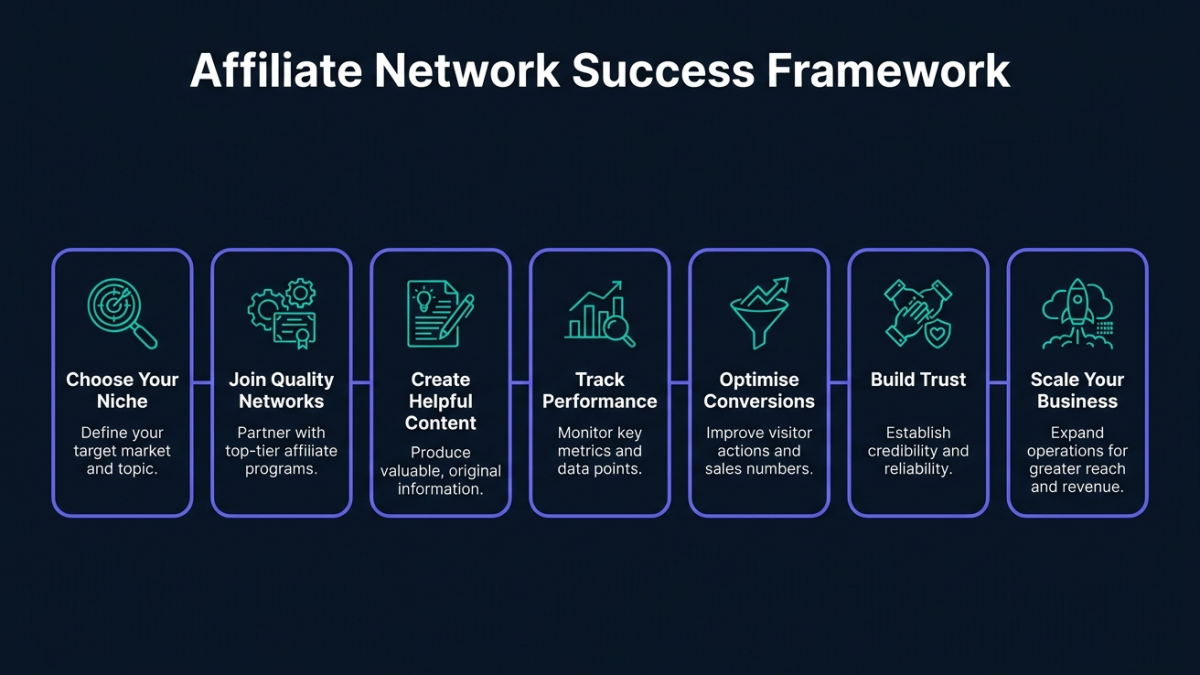
When I first entered affiliate marketing, I believed success depended on finding the highest-paying affiliate program. After years of researching advertisers, testing affiliate platforms, analysing commission structures, and watching how experienced publishers actually grow their businesses, I realised something completely different. The affiliate network itself isn’t what determines your success. Your success comes from choosing the right audience, creating genuinely useful content, recommending products that solve real problems, and building trust over time. Affiliate networks simply make that process easier by providing reliable tracking, campaign management, reporting, and commission payments. If you’re just getting started, don’t feel pressured to join every network available. Instead:- Choose one niche.
- Learn one or two quality affiliate networks thoroughly.
- Create helpful content consistently.
- Track your results.
- Improve your highest-performing pages.
- Scale gradually.
The publishers who succeed for years are rarely the ones chasing every new opportunity. They’re the ones who become genuinely valuable within one niche.
Frequently Asked Questions
What is an affiliate network?
An affiliate network is a platform that connects advertisers with publishers. It provides campaign discovery, tracking technology, reporting, commission management, and payment processing so publishers can promote multiple advertisers through one account.How does an affiliate network make money?
Most affiliate networks earn revenue by charging advertisers a percentage of successful sales or leads generated through the network. Publishers receive their agreed commission, while the network keeps a small service fee for managing the platform.Are affiliate networks free to join?
Yes. Reputable affiliate networks do not charge publishers registration fees. Joining is normally free, although individual advertiser campaigns may require approval.Can beginners join affiliate networks?
Absolutely. Many affiliate networks welcome beginners, especially if they have a professional website, useful content, and comply with advertising guidelines.If you’re creating affiliate content for readers in the United States, it’s also worth reviewing the FTC Endorsement Guides , which explain how affiliate relationships and endorsements should be disclosed.
Should I join multiple affiliate networks?
Eventually yes—but not immediately. It’s usually better to learn one or two networks properly before expanding into several platforms.What’s the difference between an affiliate network and a publisher platform?
An affiliate network connects advertisers and publishers while handling tracking and commissions. A publisher platform helps publishers discover campaigns, monitor performance, and manage multiple affiliate partnerships more efficiently from one dashboard.Which affiliate network pays the highest commissions?
There isn’t one universal answer. Commission rates depend on the advertiser, industry, product value, and campaign objectives. SaaS, finance, business software, and web hosting generally offer some of the highest-paying affiliate opportunities.Can affiliate marketing become a full-time business?
Yes. Thousands of publishers earn full-time income through affiliate marketing by consistently publishing valuable content, building trust, improving conversion rates, and promoting relevant products over the long term.Is affiliate marketing legal?
Yes. Affiliate marketing is legal in most countries as long as publishers clearly disclose affiliate relationships and follow local advertising regulations. For example, publishers targeting Australian audiences can review guidance published by the Australian Competition and Consumer Commission (ACCC) .
Ready to Build Your Affiliate Business?
If you’re serious about growing as a publisher, influencer, blogger, or content creator, learning how affiliate networks work is only the beginning.
Continue exploring our Affiliate Marketing Guides to learn about:
- How Affiliate Marketing Works
- Most Profitable Affiliate Niches
- Publisher Growth Strategies
- Influencer Marketing
- Performance Marketing
- Advertiser Campaign Management
- Affiliate Tracking & Reporting
The more you understand the ecosystem, the easier it becomes to build a sustainable affiliate business that continues growing year after year.
Affiliate marketing continues to evolve, but one thing hasn’t changed: publishers who focus on trust, consistency, and genuinely helping their audience almost always outperform those chasing shortcuts. Whether you’re just getting started or looking to scale an established affiliate business, building strong knowledge now will pay dividends for years to come.